History
A History of Cambodia: David Chandler
The standard single-volume history, from Funan to the modern day. Dry in places, indispensable overall.
Go deeper
The temples make more sense (and the country means more) when you know the story. A primer, the etiquette that matters, and what to read, watch and visit.
Five minutes of context
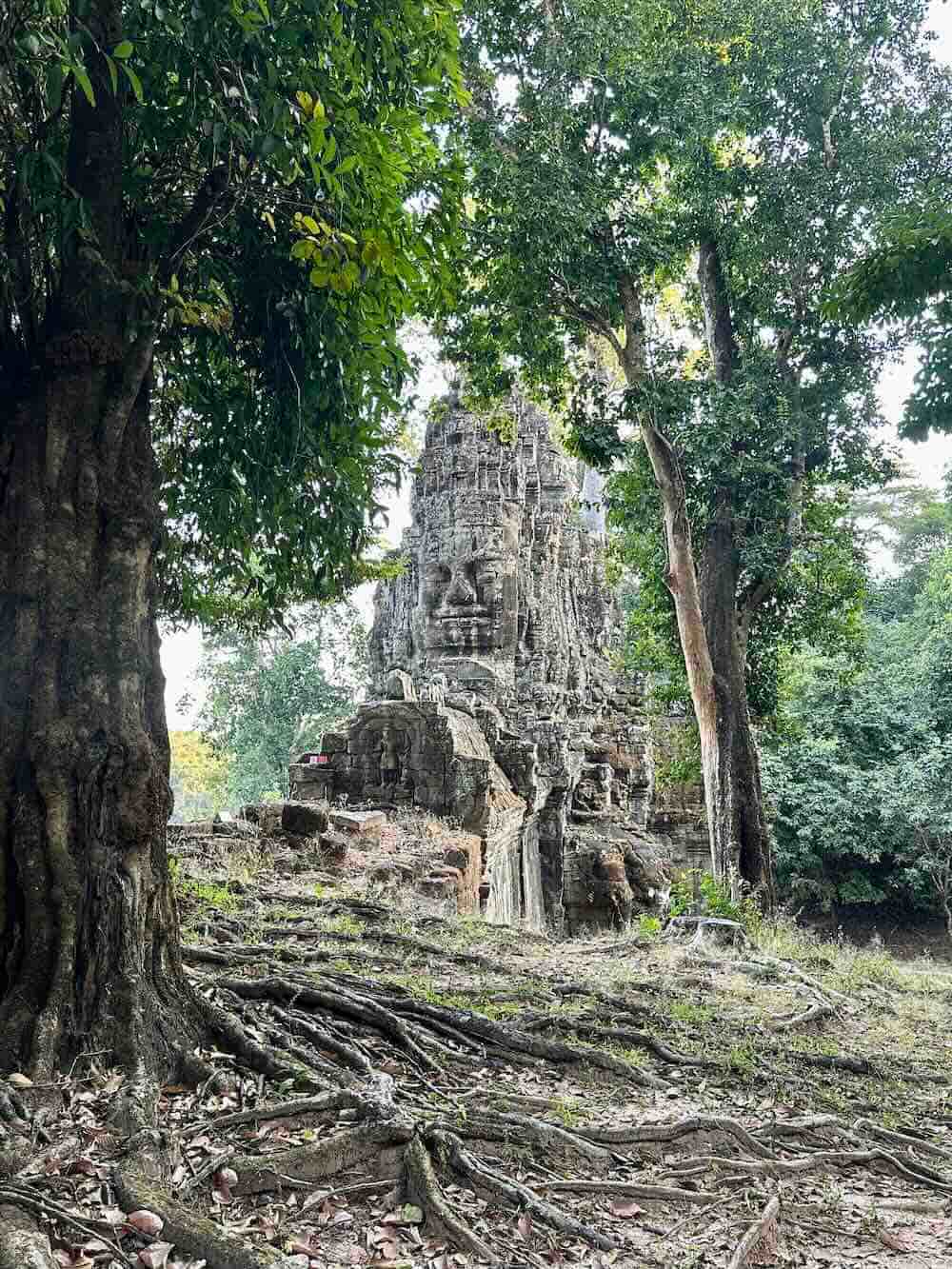
From the 9th to the 15th century, the Khmer Empire ruled much of Southeast Asia from Angkor: at its height the largest city on earth, whose hydraulic engineering and temple-mountains still define Cambodian identity. Angkor Wat, built in the early 12th century, has never really been “lost”: it remained a living shrine as power shifted south and the empire faded.
A French protectorate from 1863, Cambodia regained independence in 1953 under King Norodom Sihanouk and enjoyed a golden age of music, cinema and architecture (then was pulled into the Vietnam War’s spillover. In 1975 the Khmer Rouge seized power and, in less than four years, caused the deaths of an estimated 1.7 to 2 million people) a quarter of the population: through execution, starvation and forced labour.
Vietnam’s 1979 invasion ended the regime but not the war, which smouldered into the 1990s. The country you visit today has rebuilt at astonishing speed: two-thirds of Cambodians are under 35, Phnom Penh hums with construction and creativity, and the past is neither hidden nor allowed to define the present. Visiting the memorials (respectfully) is part of understanding that.
Respect, easily
Read
History
The standard single-volume history, from Funan to the modern day. Dry in places, indispensable overall.
Memoir
A childhood under the Khmer Rouge, told with unbearable clarity. The book behind the film.
Memoir
The Frenchman who was a prisoner of Duch, and later negotiated at the gate of the French embassy in 1975. Haunting.
Modern politics
The clearest account of how post-war Cambodia actually works: patronage, aid, growth and power.
Reportage
A Pulitzer-winner’s hard look at the aid decades. Polemical, argued with: read alongside Strangio.
Angkor
What the temples were for, how the city fed itself, what archaeology keeps discovering. Makes every ruin legible.
Watch
1984 · Drama
The journalist Dith Pran’s survival story: still the essential dramatisation of 1975 and after. Haing S. Ngor, himself a survivor, won an Oscar for it.
2017 · Drama
Angelina Jolie’s Khmer-language adaptation of Loung Ung’s memoir, shot in Cambodia with Rithy Panh producing: a child’s-eye view, beautifully made.
2013 · Documentary
The great Cambodian filmmaker reconstructs his family’s destruction with clay figurines and archive film. Oscar-nominated, unlike anything else.
2014 · Documentary
The lost golden age of Cambodian rock’n’roll: the joyous flip side of the country’s 60s, and what happened to its stars.
Listen
The music the documentary is about: put it on while you plan, and Phnom Penh sounds different when you land.
The soundtrack
The golden voice of Cambodia
The king of Khmer song in the 60s and 70s: sunlit pop, psychedelic rock and boleros. He recorded hundreds of songs before disappearing under the Khmer Rouge. This music is the sound of the country before, and it is everywhere again today.
Visit
Phnom Penh
The world’s finest Khmer sculpture collection in a gorgeous 1920 terracotta building beside the Royal Palace. Go before Angkor: the statues bring the empty pedestals to life.
Phnom Penh
The school-turned-prison and the killing field, kept as memorials. Heavy, essential, best with the audio guides. Not for young children; give yourself a gentle evening after.
Phnom Penh
Cambodia’s history told through money and economics: far more gripping than it sounds, in a beautiful colonial building. One of the city’s most underrated hours.
Siem Reap
Context for the temples: the thousand-Buddha gallery, the churning of the sea of milk explained. Air-conditioned. Perfect for a scorching afternoon.
Siem Reap
Meet the landmine-detecting rats and understand Cambodia’s demining miracle in an hour. Uplifting, genuinely, and your ticket funds the work.
Good to know
Tuol Sleng and Choeung Ek are explicit and not recommended for young children. Many families visit the National Museum and Sosoro instead, and talk about the history at an age-appropriate level. There is no obligation to see the memorials to travel respectfully.
Follow their lead. Many older Cambodians are survivors and some speak openly, especially guides who choose to share; others prefer not to. Never press, and receive what is shared with care.
Khmer: a beautiful, non-tonal language with its own script. English is widely spoken in tourism, and older generations sometimes speak French. Learning “sous-dey” (hello) and “aw-kun” (thank you) is appreciated everywhere.
Continue planning
Get the best events, new stories and limited offers delivered once a week.