All articles
5 Traditional Khmer Dishes to Try in Cambodia
A short guide to five Khmer dishes worth knowing before you visit Cambodia — fish amok, lok lak, Khmer red curry, num banh chok and bay sach chruk.
A short guide to five Khmer dishes worth knowing before you visit Cambodia — fish amok, lok lak, Khmer red curry, num banh chok and bay sach chruk.
Khmer food doesn't travel the way its neighbours' does. It rarely turns up on high streets abroad, which means most travelers meet it for the first time on the plate, in Cambodia. It's worth the wait: fresh herbs, gentle spice, a lot of lemongrass and turmeric, and dishes that lean fragrant rather than fiery. Here are five to know before you go, and what to expect from each.
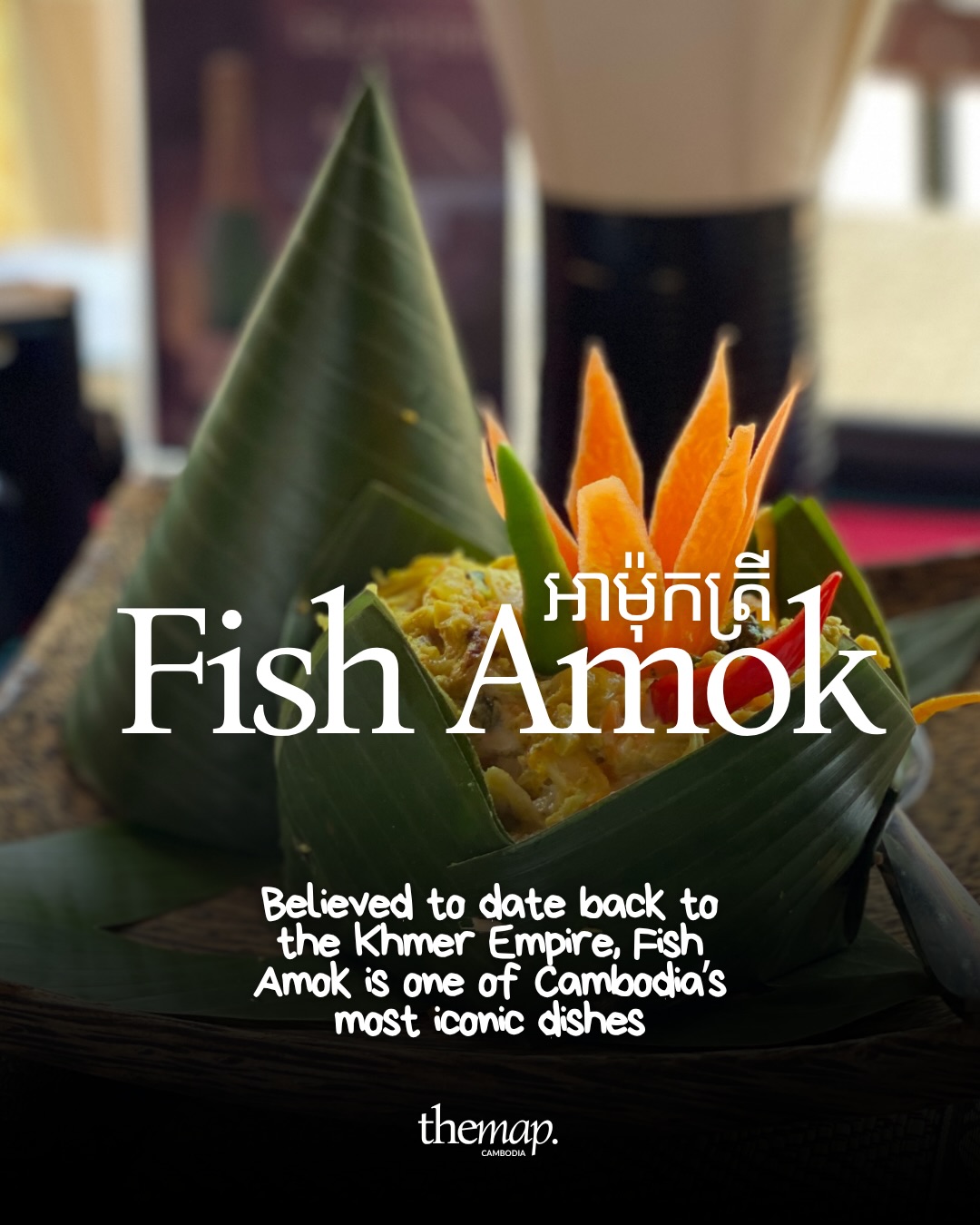
If a single dish stands in for Cambodian cooking, it's fish amok (អាម៉ុកត្រី). Freshwater fish is folded into a thick, custard-like curry built on kroeung — the lemongrass, galangal and turmeric paste at the heart of so much Khmer food — then steamed in a banana-leaf cup until it sets. The version pictured comes topped with slivers of chilli and carrot, mild and creamy rather than hot. It's often described as one of the country's oldest dishes, with roots said to reach back to the Khmer Empire.
Start here if it's your first Khmer meal. It's the easiest way to understand what kroeung does to a curry.
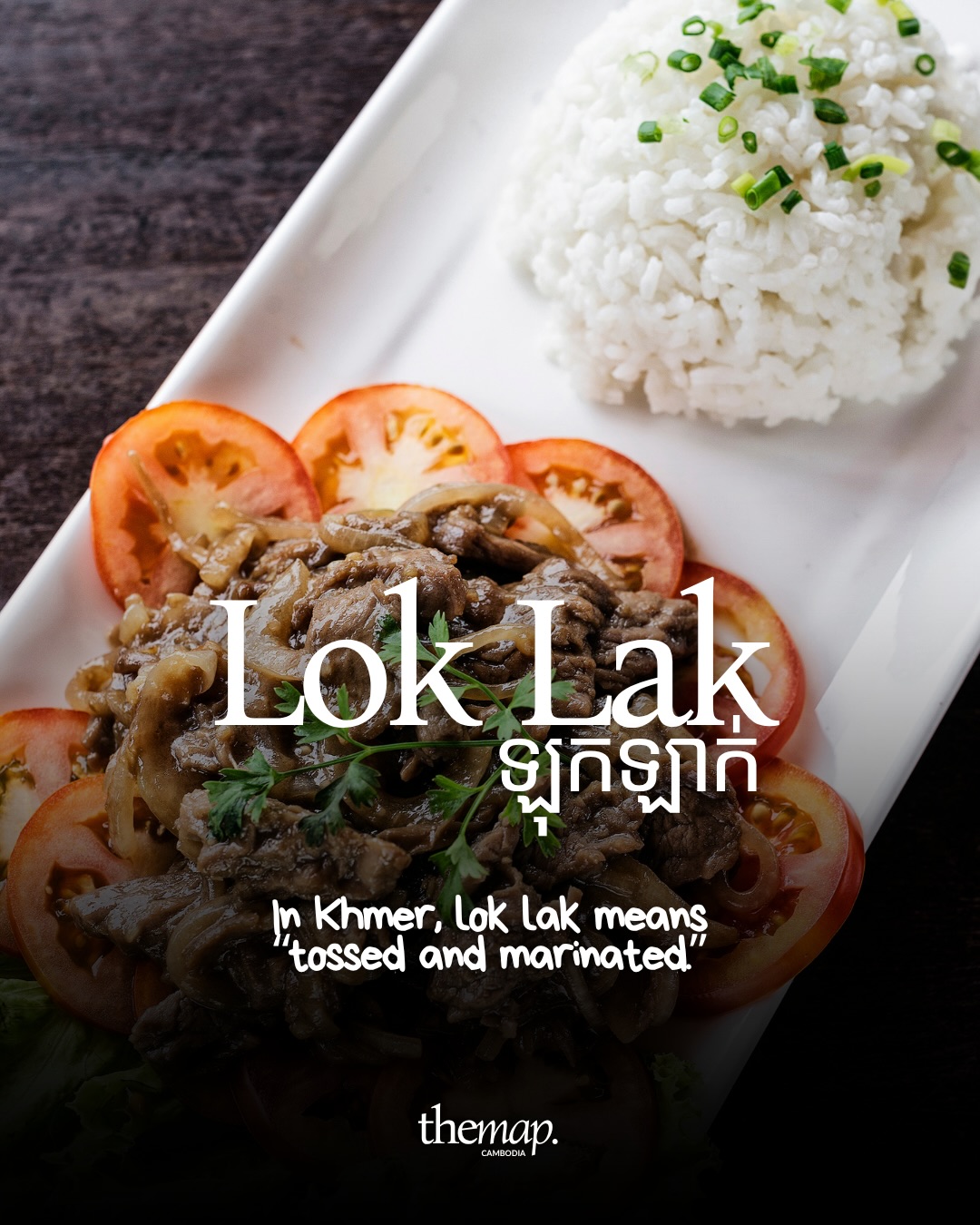
Lok lak (ឡុកឡាក់) is the reliable one — stir-fried strips of marinated beef, served over rice or lettuce with a side of tomato and onion, and a dipping sauce of lime, salt and black pepper. The name itself means "tossed and marinated," which is more or less the whole method. On the plate you'll usually find the beef ringed with tomato slices and a pile of rice, as shown here.
It's a safe order for anyone easing into local food, and a good marker for a kitchen: well-made lok lak has tender beef and a sauce sharp with fresh lime.
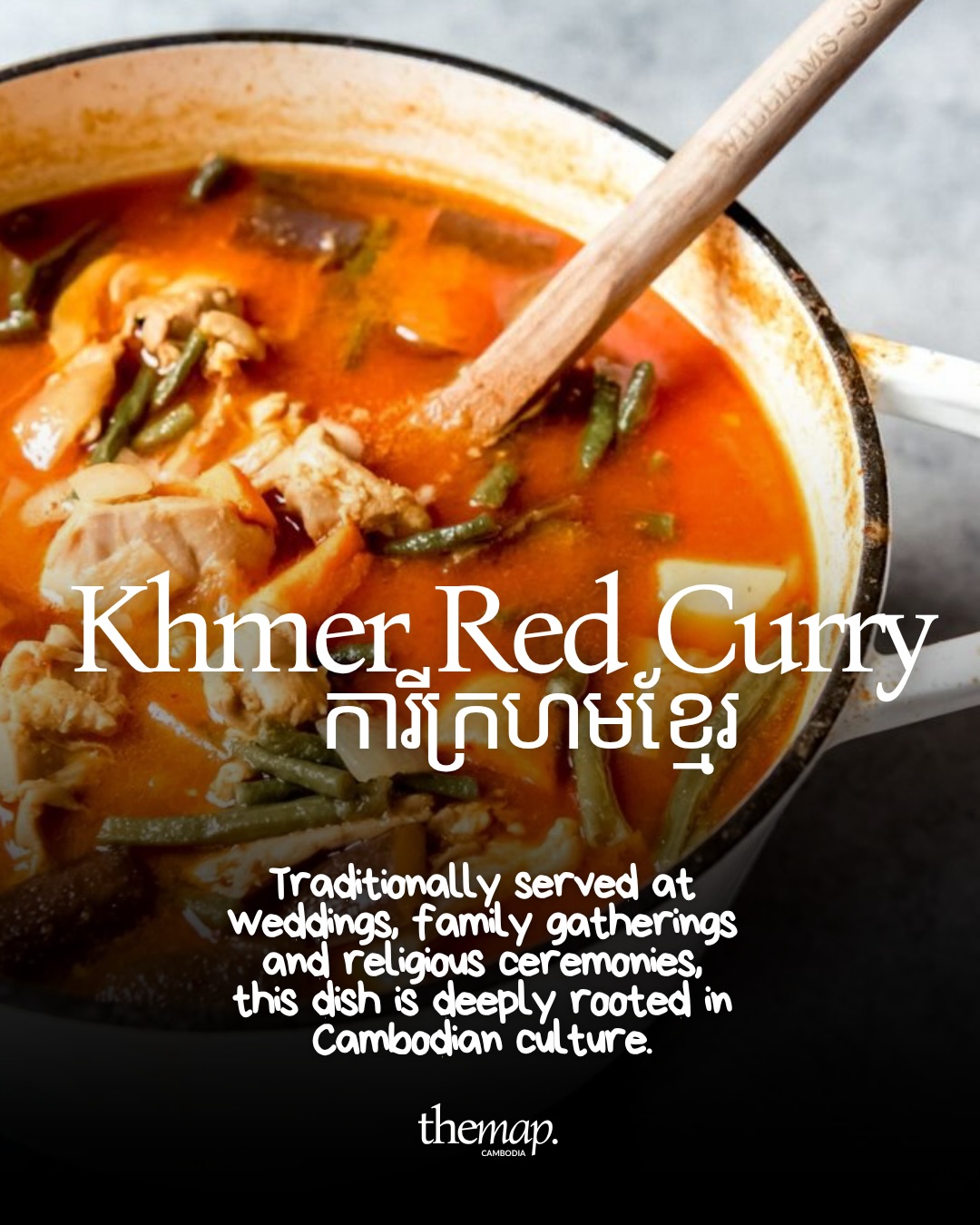
Milder and soupier than Thai red curry, Khmer red curry (ការីក្រហមខ្មែរ) usually carries chicken or beef with long beans, and vegetables in a coconut-rich broth. It's a dish tied to gatherings — traditionally cooked for weddings, family occasions and religious ceremonies — so ordering it is a small window into how Cambodians actually eat together.
It's usually served with bread or rice to soak up the broth. Good for sharing, and gentle if you're wary of heat.
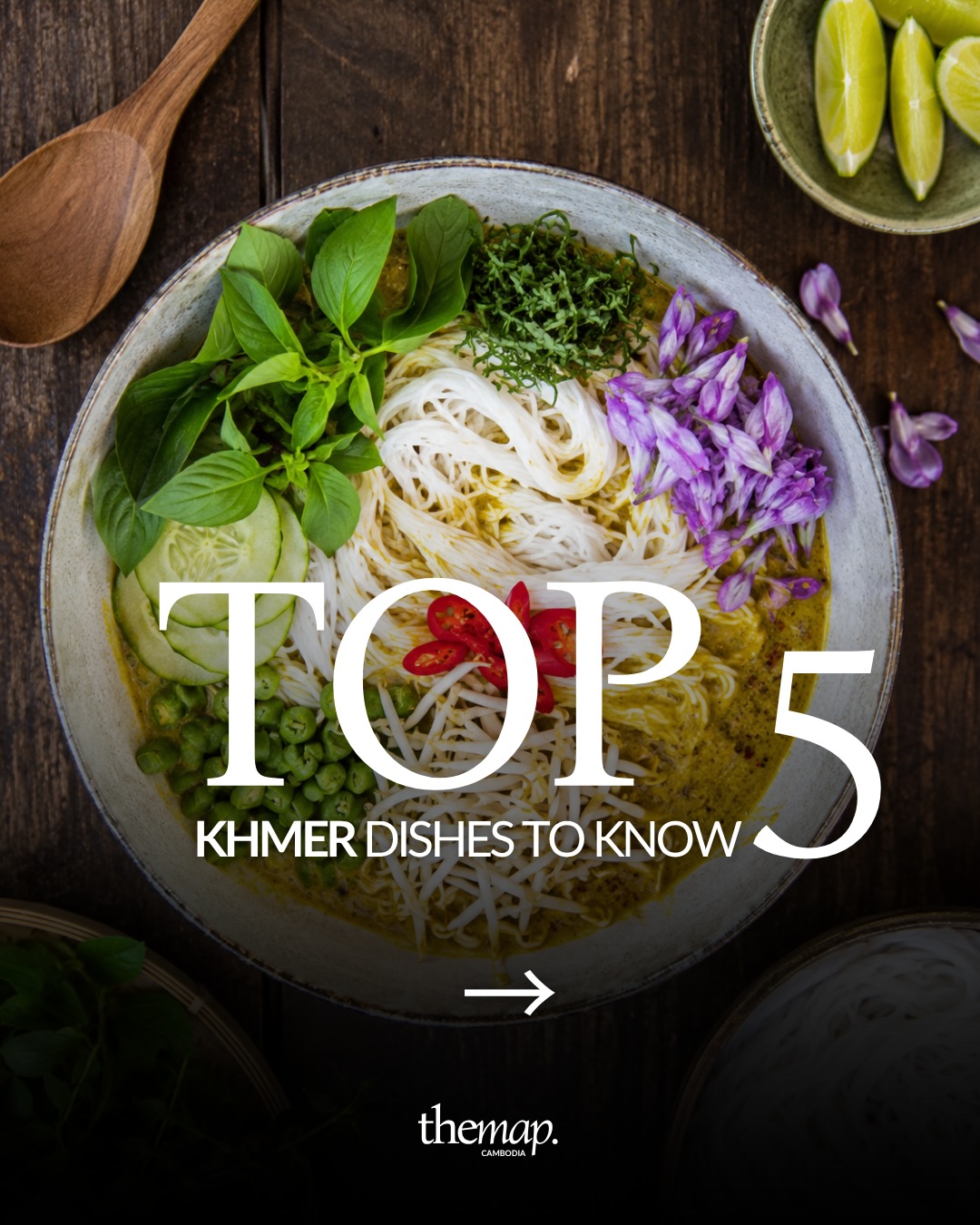
Sold from morning carts and markets, num banh chok (នំបញ្ចុក) is fermented rice noodles under a green fish-based gravy, piled with raw and blanched vegetables — cucumber, bean sprouts, long beans, banana flower, fistfuls of herbs. The name roughly translates as "to feed." The bowl here shows the spread well: cool noodles, basil, sliced chilli and edible flowers, all meant to be mixed together.
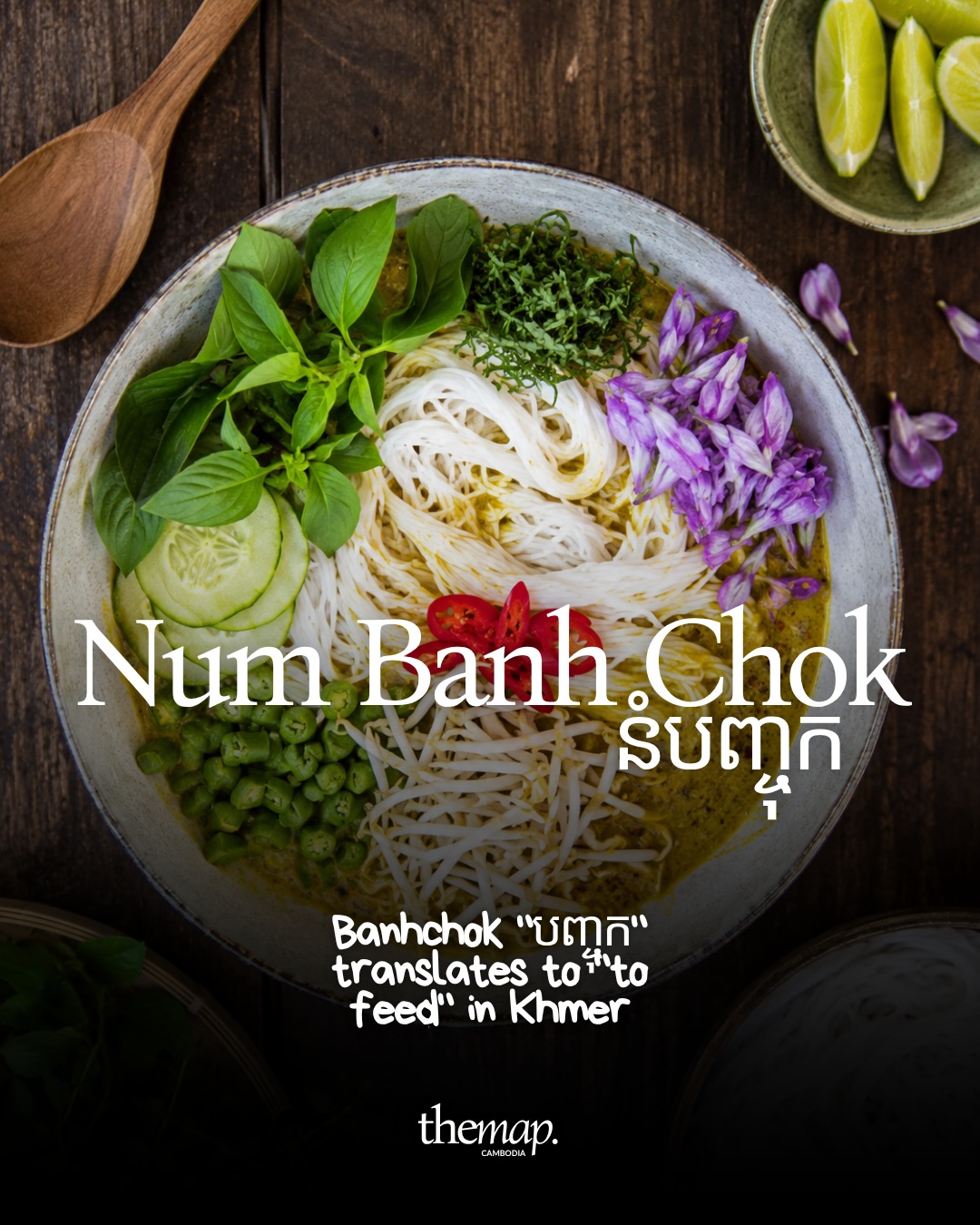
It's often eaten early in the day and it's naturally light — a good pick when the heat kills your appetite for anything richer.
Ask what Cambodians order in the morning and the answer is often bay sach chruk (បាយសាច់ជ្រូក): grilled marinated pork, thinly sliced over broken rice, with pickled vegetables and sometimes a bowl of clear broth on the side. Simple, smoky, cheap and everywhere. The plate pictured has the essentials — charred pork, rice, and pickled carrot and cucumber for a bit of sharpness.
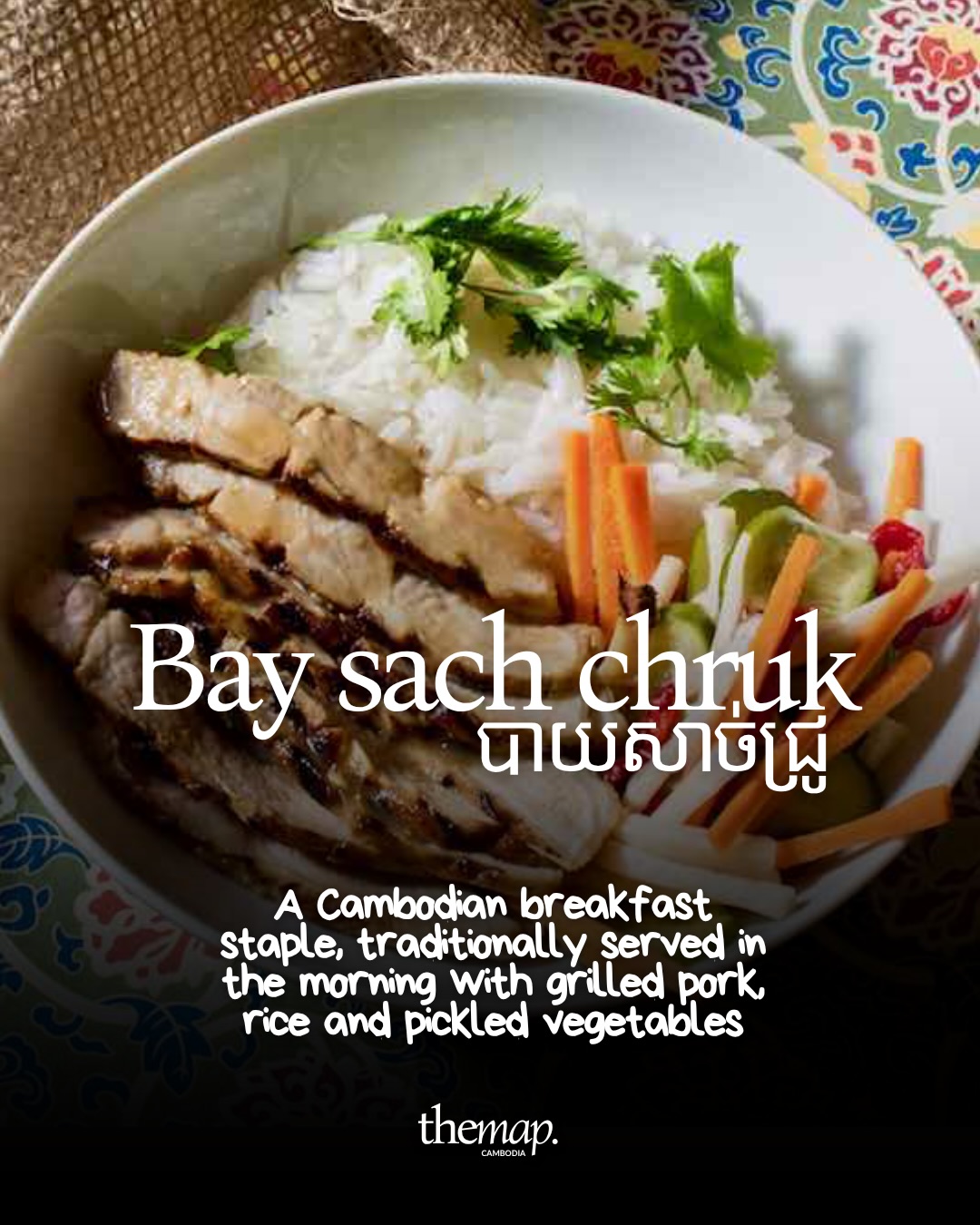
It's the most everyday dish on this list, and often the best way to start a day of walking.
Two Phnom Penh kitchens we'd point you to for a proper introduction to these dishes are Baisor (@baisor.po2) and Houb Houb (@houbhoub_cambodia) — both good places to work through the classics in one sitting. Opening times shift, so check current hours before you go.
Learning a couple of dish names in Khmer makes ordering easier and tends to be well received — our short guide to useful Khmer words covers the basics. If you're building a day around eating, the 24 hours in Phnom Penh itinerary is a good place to slot these meals in.
Explore more places to eat on The Map Cambodia.
From inspiration to the ground
Find the places and practical details for your next outing. Save your favourites to keep them close at hand.
Fourteen useful Khmer expressions, Khmer script to copy and numbers for prices: a practical guide for cafés, markets and everyday travel.
ReadCompare Koh Rong, Koh Rong Samloem and Koh Sdach by atmosphere, bays, community and transfer complexity before choosing where to stay.
ReadWhat's on in Siem Reap this week (15 October–21 October 2026): a curated edit of 9 events. Selected from published listings.
Read