All articles
How to Pay in Cambodia: Riel, Dollars, Cards and QR Explained
How to pay in Cambodia using riel, US dollars, cards and KHQR, with practical Bakong Tourists setup and cash-backup tips for travelers.
How to pay in Cambodia using riel, US dollars, cards and KHQR, with practical Bakong Tourists setup and cash-backup tips for travelers.
Most travelers land in Cambodia expecting to fumble with an unfamiliar currency. The reality is easier. The country has its own official currency, the Khmer riel, alongside the widely accepted US dollar, and a growing number of places — from hotel restaurants to fruit stalls at the market — just want you to scan a QR code. Here's how money actually works on the ground, and how to use it in a way that's simple for you and good for the places you visit.
The simple answer: use riel for small cash purchases, keep clean US-dollar notes as a backup, use cards at larger businesses and pay by KHQR where it is accepted.
In practice, you'll use one of four methods, often switching between them in a single day.
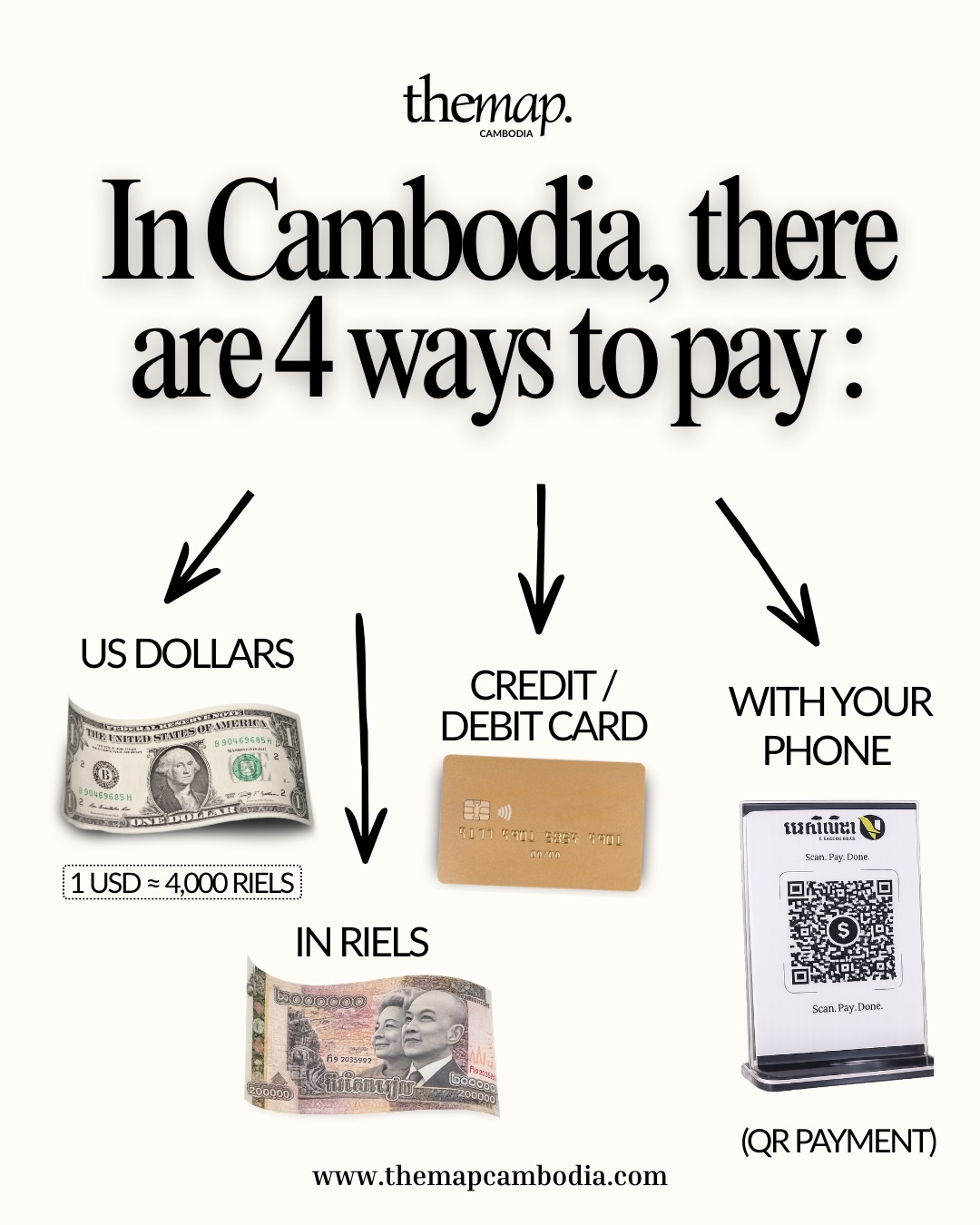
It's easy to lean on dollars as a visitor, but the riel is the currency the country runs on, and the National Bank of Cambodia has been actively encouraging its everyday use. Paying in riel is straightforward: the 1 USD ≈ 4,000 riel rate makes the maths simple, and small notes are perfect for street food, tuk-tuks, markets and tips.
A practical habit: when you pay in dollars and get riel as change, keep it and spend it rather than treating it as a souvenir. It saves you breaking another note later, and it's the easiest way to support the local currency as you go. Riel is best for smaller, day-to-day spending; for a large hotel bill or a card terminal, dollars and QR both still have their place.
Dollars remain handy, particularly for your first day, for taxis and for anywhere that prefers cash. Keep your notes in good condition — torn or heavily worn bills can be turned down. Think of dollars as a useful backup rather than your only plan: a modest amount covers arrival and emergencies, while riel and QR handle most of the rest.
QR payment is now widely used in Cambodia. You'll see the small printed code stands on café counters, restaurant tables, shop tills and market stalls alike — places where a card machine would never appear. The National Bank of Cambodia reported about 4.5 million KHQR merchant locations in its 2024 annual report; the exact number keeps growing. Better still, KHQR works in riel, so you can pay in the local currency without handling cash at all. See the National Bank's Bakong information.
The appeal is obvious once you try it: no notes to count, no change to wait for, no card terminal that may or may not work. You open your app, scan the code, confirm the amount and you're done.

The practical question is which app to use. The Bakong system connects Cambodia's banks and payment apps, and the Bakong Tourists app is designed for visitors who do not have a local bank account. Registration uses an email address and creates a recovery QR that you should save securely. Full verification asks for a passport photo and selfie and raises the transaction limit. Supported international Visa and Mastercard cards can be used to fund the account, although availability and card fees can depend on the issuer. Set it up before relying on it for a payment. Read the official Bakong Tourists manual.
If you bank with one of the larger Cambodian banks, their own apps also scan the same codes. Either way, the experience is the same on the merchant's side: one code, scanned from your phone.
You don't need to choose just one method. The easiest approach: keep small riel for street food, markets, tuk-tuks and tips; carry a modest amount of US dollars for arrival and anywhere that prefers cash; and set up a QR app for everything else. That mix covers a market lunch, a tuk-tuk ride and a hotel bill without any friction.
A few things worth keeping in mind:
If you're curious about how Cambodia's currency and financial system came to be, the SOSORO Museum in Phnom Penh is a good stop. It's an easy, well-presented way to add some context to the riel and the codes you'll be using on your trip.

Explore more travel tips and places we like on The Map Cambodia.
See our airport transfer and first-evening guide for the next practical decisions after landing.
From inspiration to the ground
Explore the stops that interest you. For the exact order, realistic timing and coordination, we then shape the trip around your dates.
Payments sorted. What about the rest of your trip?
Our team plans around your dates and pace. Explore the service and planning fee, confirmed in a quote before you commit.
Five useful Khmer expressions, a quick reference table and numbers from one to ten for cafés, markets and everyday travel in Cambodia.
ReadA short guide to five Khmer dishes worth knowing before you visit Cambodia — fish amok, lok lak, Khmer red curry, num banh chok and bay sach chruk.
ReadSeven places to visit in Cambodia beyond Angkor, from Koh Rong Sanloem and Tonlé Sap to Kratie’s dolphins, crater lakes and mountain landscapes.
Read