All articles
Useful Khmer Words to Know Before You Visit Cambodia
Five useful Khmer expressions, a quick reference table and numbers from one to ten for cafés, markets and everyday travel in Cambodia.
Five useful Khmer expressions, a quick reference table and numbers from one to ten for cafés, markets and everyday travel in Cambodia.
How do you say hello and thank you in Khmer? Start with Sousdey (សួស្ដី) for hello and Arkoun (អរគុណ) for thank you. Keep these five expressions and the numbers below ready for cafés, markets and everyday exchanges during your trip.
| Expression | Khmer | Meaning | When to use it |
|---|---|---|---|
| Sousdey | សួស្ដី | Hello | Start an exchange |
| Arkoun | អរគុណ | Thank you | After a meal, purchase or ride |
| Ot skor | អត់ស្ករ | No sugar | When ordering a drink |
| Thlai ponman? | ថ្លៃប៉ុន្មាន? | How much? | Before agreeing a price |
| Chhnganh | ឆ្ងាញ់ | Delicious | After enjoying a meal |
These are the five expressions from our original selection. The Khmer spelling is useful to show someone when the spoken word is hard to catch.
អរគុណ means “thank you”. We write it Arkoun in this guide. The Khmer vocabulary from Northern Illinois University’s SEAsite records the Khmer word and its meaning; Latin spellings are only reading aids and can vary between guides.
At a café, after a purchase or at the end of a ride, the short expression is the one to keep ready. If the sound is unfamiliar, ask someone to say it and repeat it back. You can also show the Khmer script from the table or use the pocket card below.
Khmer, or ភាសាខ្មែរ, is the official language of Cambodia and one of the oldest languages in Southeast Asia. It belongs to the Austroasiatic language family and was shaped over centuries by Sanskrit and Pali through Hinduism and Buddhism — the same cultural threads you'll see in the country's classical dance and temple art.
Unlike Thai, Lao or Vietnamese, Khmer is not tonal, which makes it a little more approachable for first-time visitors. Its script has been in use since at least the 7th century. More than a means of communication, the language is a central part of Cambodian identity.
Five everyday words to start with — easy to remember and useful from your first day.

Sousdey (សួស្ដី) is a friendly hello for an informal exchange, such as greeting someone at a shop or starting a conversation with a driver. A smile and a sousdey are a good way to begin almost any exchange.
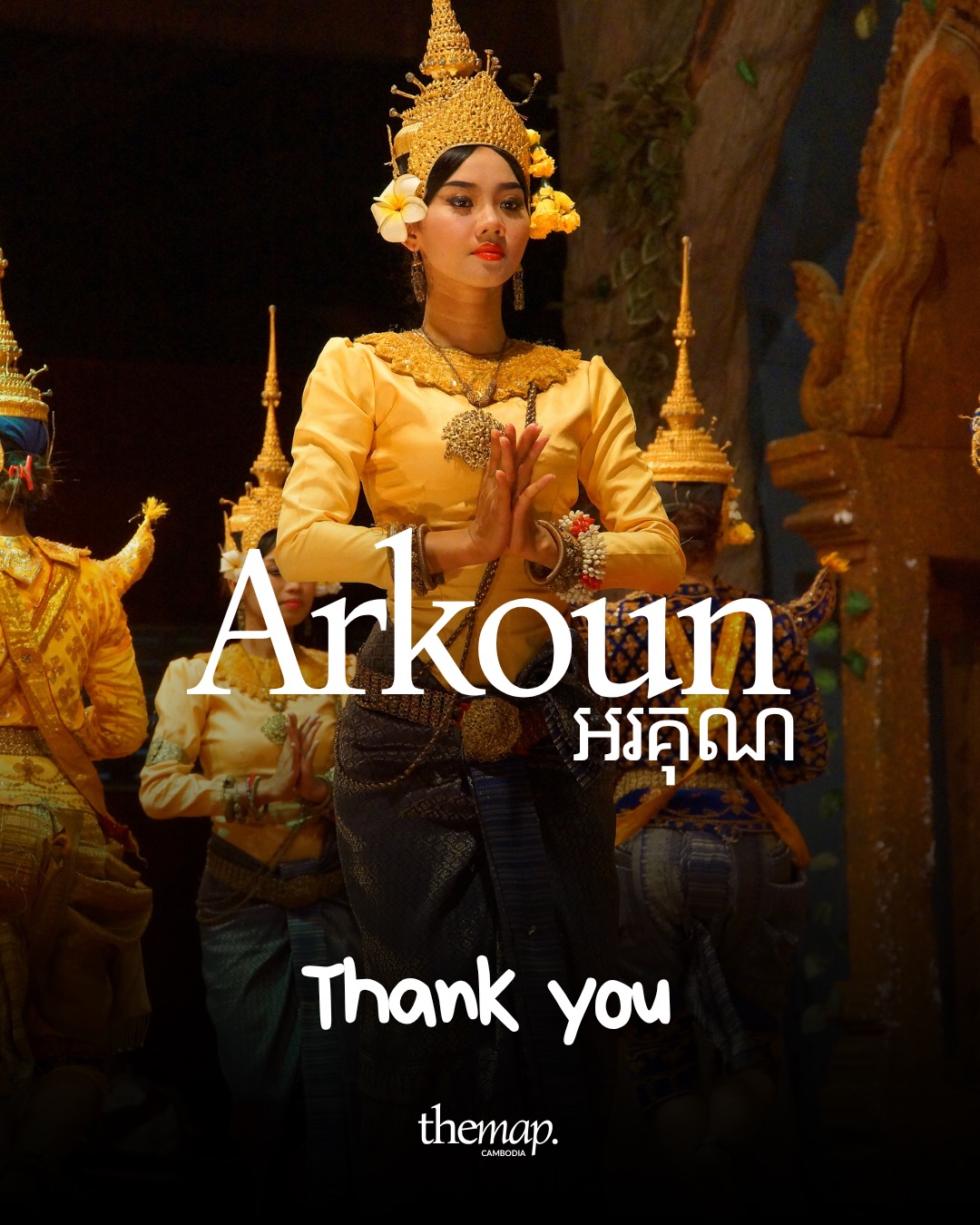
Arkoun (អរគុណ) means thank you. It's a small word that travels well — at a market stall, after a meal, or at the end of a spa treatment. Saying it, even imperfectly, is usually met with a warm response.
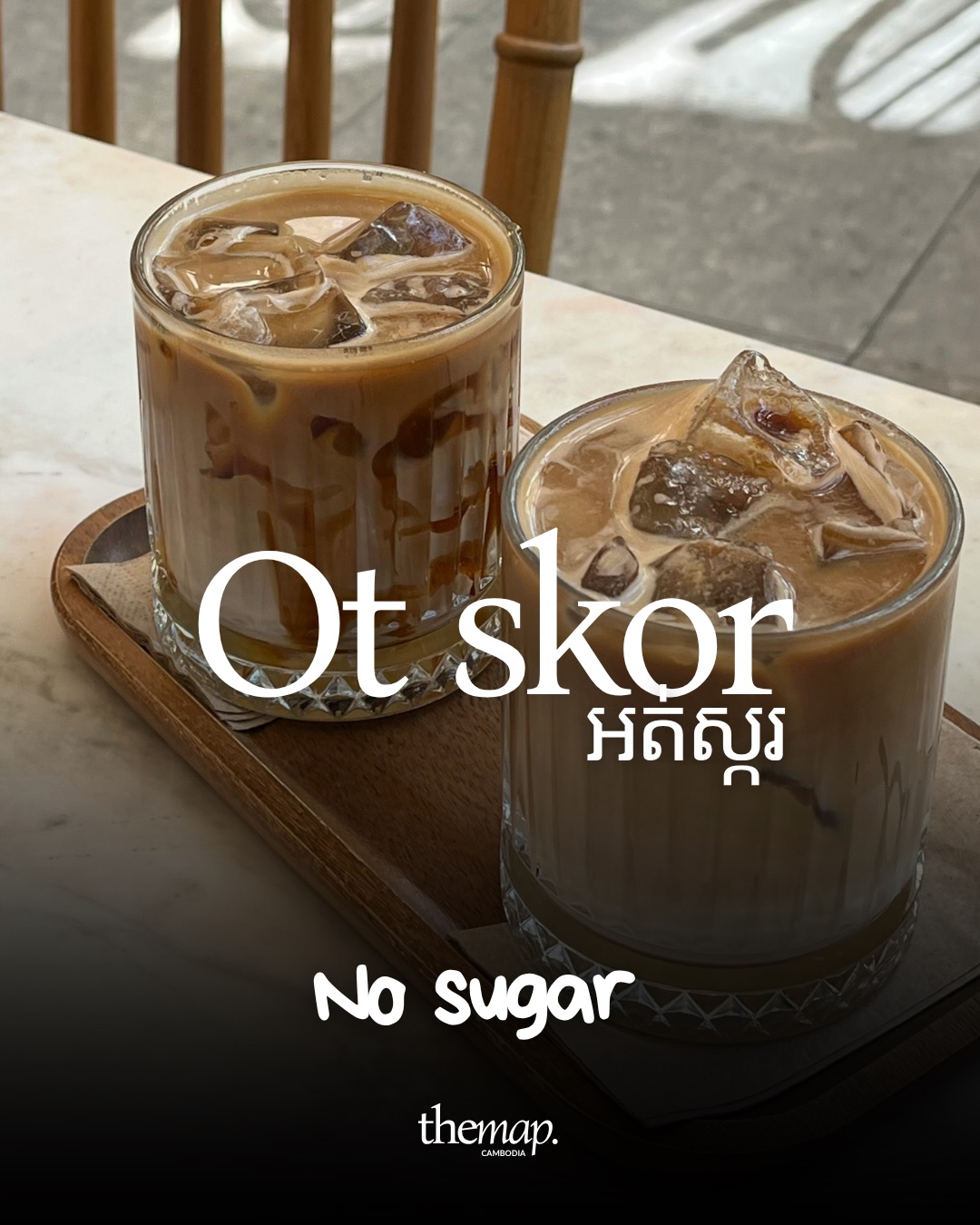
Ot skor (អត់ស្ករ) means no sugar — a genuinely practical phrase in Cambodia, where iced coffee and drinks are often served sweet. Use it when asking for a drink without added sugar, and confirm the request at the counter.
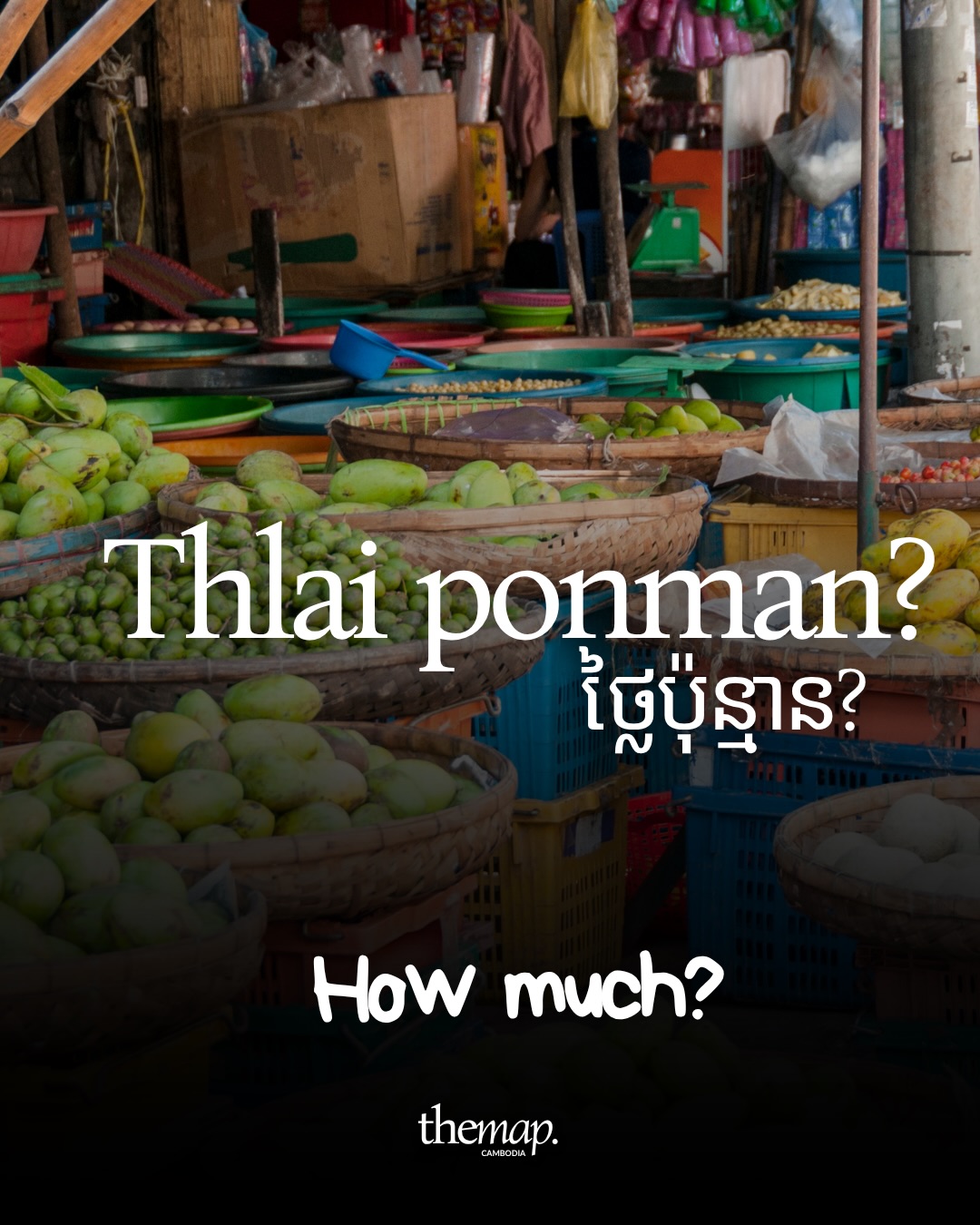
Thlai ponman? (ថ្លៃប៉ុន្មាន?) means how much? It's the question to keep ready at markets and street stalls, whether you're buying fruit, a snack or a souvenir. A few numbers in Khmer make it even more useful — and it pairs well with knowing how to pay in Cambodia, where riel, dollars and QR codes all turn up in the same transaction.
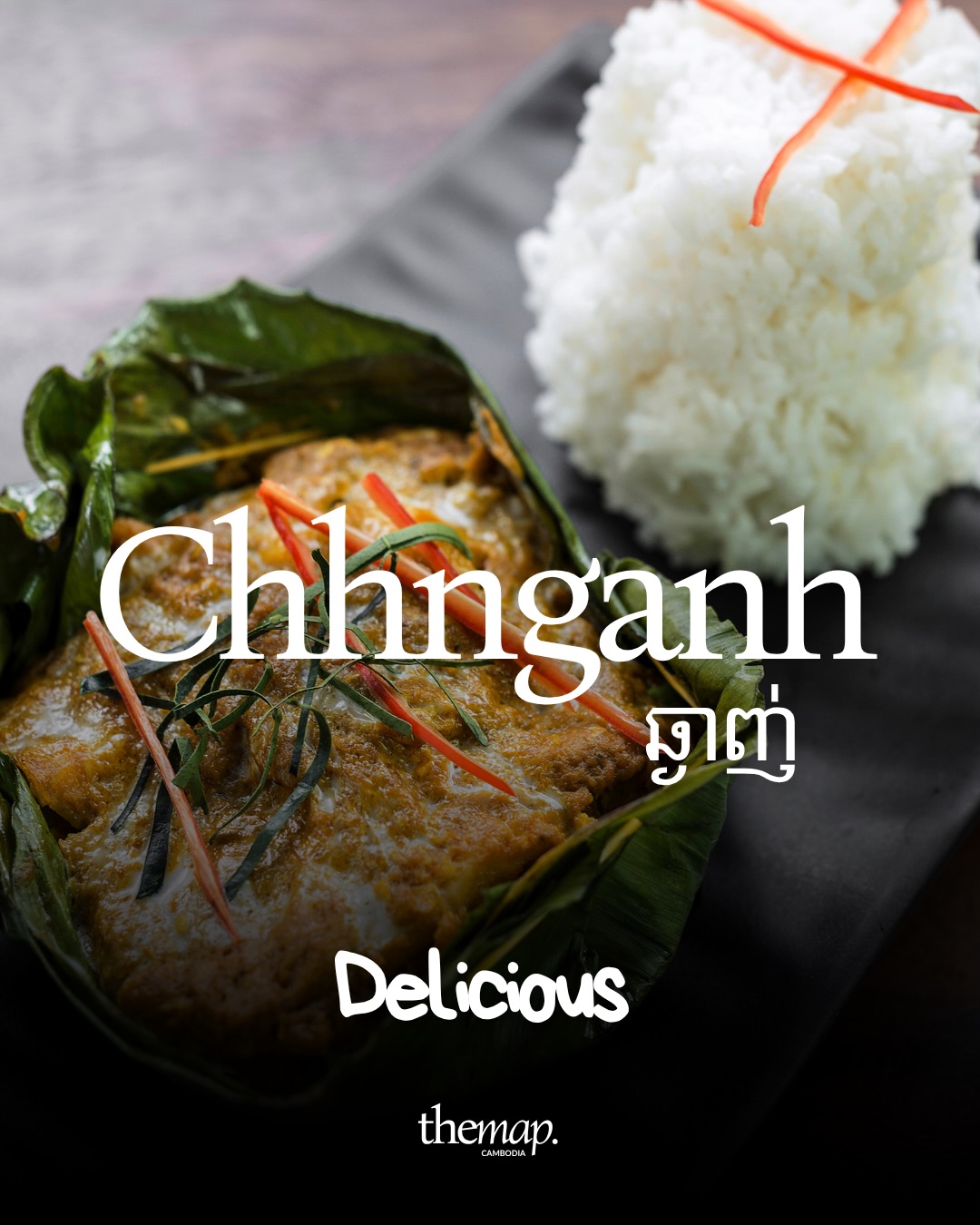
Chhnganh (ឆ្ងាញ់) means delicious. It's a nice word to offer after a good meal — a quick way to thank a cook or a stall owner and to share that you enjoyed what you ate. Few things open up a conversation faster than appreciating the food.
| Number | Khmer digit | Khmer word | Reading aid |
|---|---|---|---|
| 1 | ១ | មួយ | muey |
| 2 | ២ | ពីរ | pii |
| 3 | ៣ | បី | bey |
| 4 | ៤ | បួន | buen |
| 5 | ៥ | ប្រាំ | pram |
| 6 | ៦ | ប្រាំមួយ | pram-muey |
| 7 | ៧ | ប្រាំពីរ | pram-pii |
| 8 | ៨ | ប្រាំបី | pram-bey |
| 9 | ៩ | ប្រាំបួន | pram-buen |
| 10 | ១០ | ដប់ | dap |
The spellings above follow the Khmer number lesson from Northern Illinois University's SEAsite. Six to nine combine five with one to four. Romanisation is a reading aid, not an exact pronunciation guide; listen to a Khmer speaker and repeat the word back.
For a price, confirm both the number and the currency. Showing the amount on a phone can be clearer than guessing what you heard.
Khmer romanisation varies, so you'll see these words spelled in different ways depending on the source. Don't worry about getting the pronunciation perfect — the effort itself is what's appreciated. Learning even a handful of words tends to make a city feel easier to navigate and a little more familiar.
Planning your first days? A one-day itinerary in Phnom Penh is a good place to put these words to use. Explore more places and travel notes on The Map Cambodia.
Pocket phrase card
Copy one phrase to show on your phone, or copy the complete card before you head out.
From inspiration to the ground
Explore the stops that interest you. For the exact order, realistic timing and coordination, we then shape the trip around your dates.
Ready to put these words to use?
Our team plans around your dates and pace. Explore the service and planning fee, confirmed in a quote before you commit.
How to pay in Cambodia using riel, US dollars, cards and KHQR, with practical Bakong Tourists setup and cash-backup tips for travelers.
ReadSeven places to visit in Cambodia beyond Angkor, from Koh Rong Sanloem and Tonlé Sap to Kratie’s dolphins, crater lakes and mountain landscapes.
ReadA short guide to five Khmer dishes worth knowing before you visit Cambodia — fish amok, lok lak, Khmer red curry, num banh chok and bay sach chruk.
Read