All articles
Lesser-Known Temples in Siem Reap: 6 Quiet Alternatives to Angkor Wat
Six quieter temples to visit around Siem Reap — from Ak Yum and Phnom Bok to Beng Mealea, Ta Nei, Phnom Krom and Banteay Samré. A calm alternative to Angkor Wat.
Six quieter temples to visit around Siem Reap — from Ak Yum and Phnom Bok to Beng Mealea, Ta Nei, Phnom Krom and Banteay Samré. A calm alternative to Angkor Wat.
Angkor Wat draws the crowds, and rightly so. But Siem Reap rewards anyone willing to look a little further. Spread across the countryside around the city are temples that see far fewer visitors — older, quieter, and often more atmospheric for it.
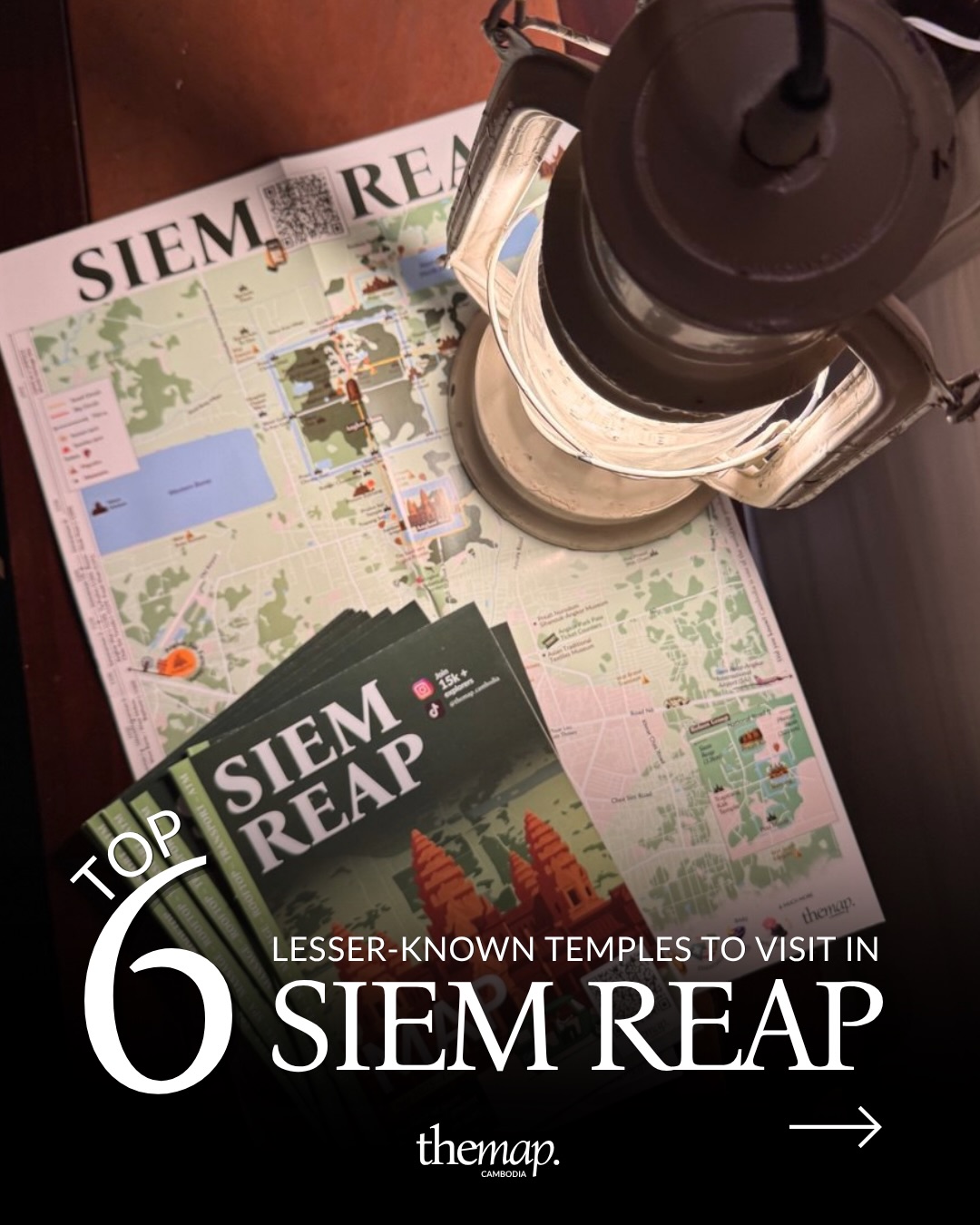
Here are six we like, drawn from a recent walk through the area: one of the oldest Angkorian sites, a steep hilltop climb, a jungle ruin made famous by cinema, and a sunset spot above the Tonlé Sap. Each is a good way to slow down and understand the region beyond its most famous silhouette.
Ak Yum is often described as one of the oldest temples in the Angkor area — an early temple-mountain that predates the great monuments most travelers come to see. What remains today is a low, weathered structure of warm red brick, its terraces softened by trees that now grow straight out of the ruins.
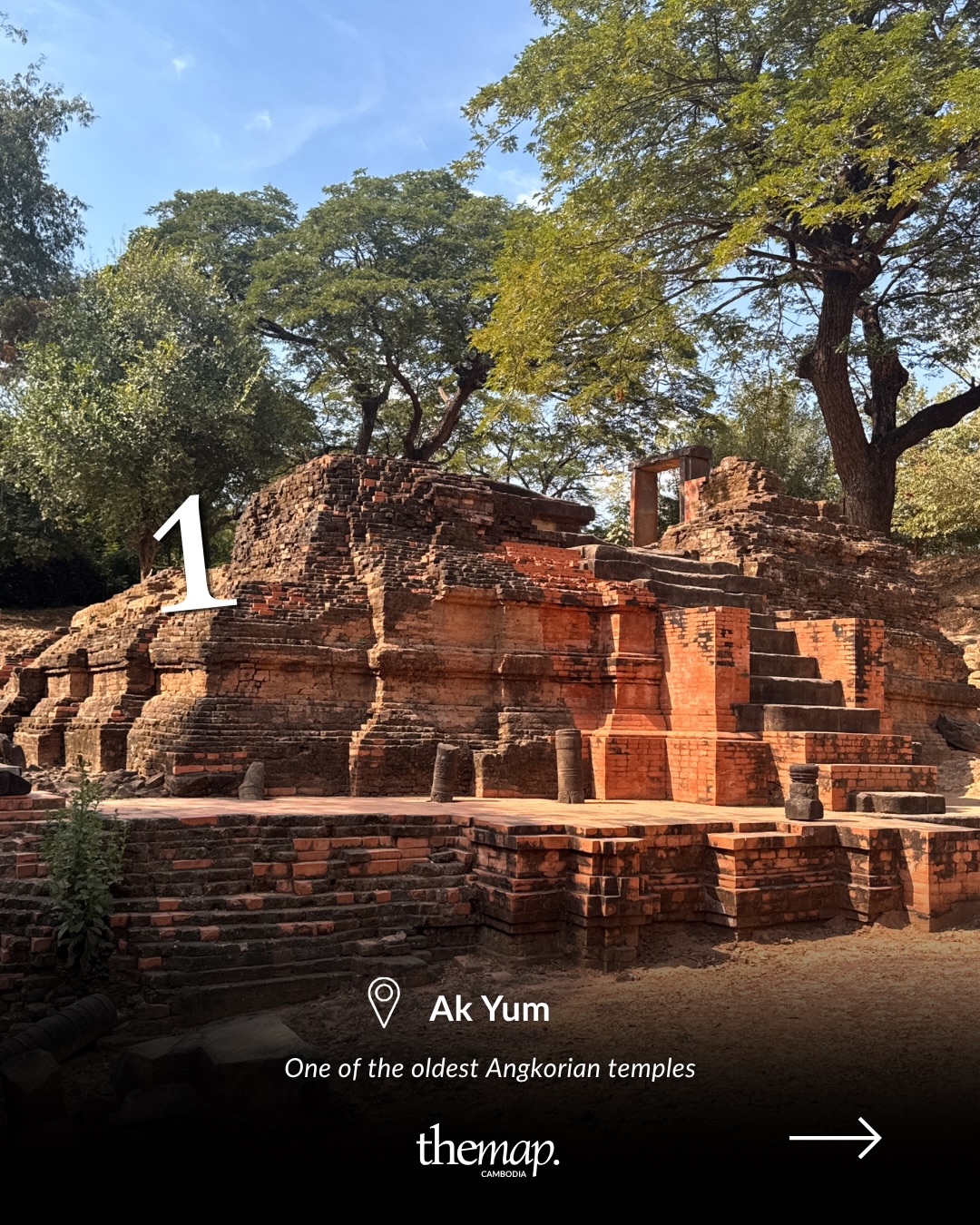
It is modest in scale and easy to miss, which is part of its appeal. Come here for a sense of how early Khmer builders worked, and for the quiet. There is little signage, so a guide helps if you want the full context.
Phnom Bok sits on a hill northeast of Siem Reap, one of three hilltop temples built during the reign of Yasovarman I — alongside Phnom Bakheng and Phnom Krom. The temple itself is small and largely in ruins, with sandstone towers framed by old frangipani trees.
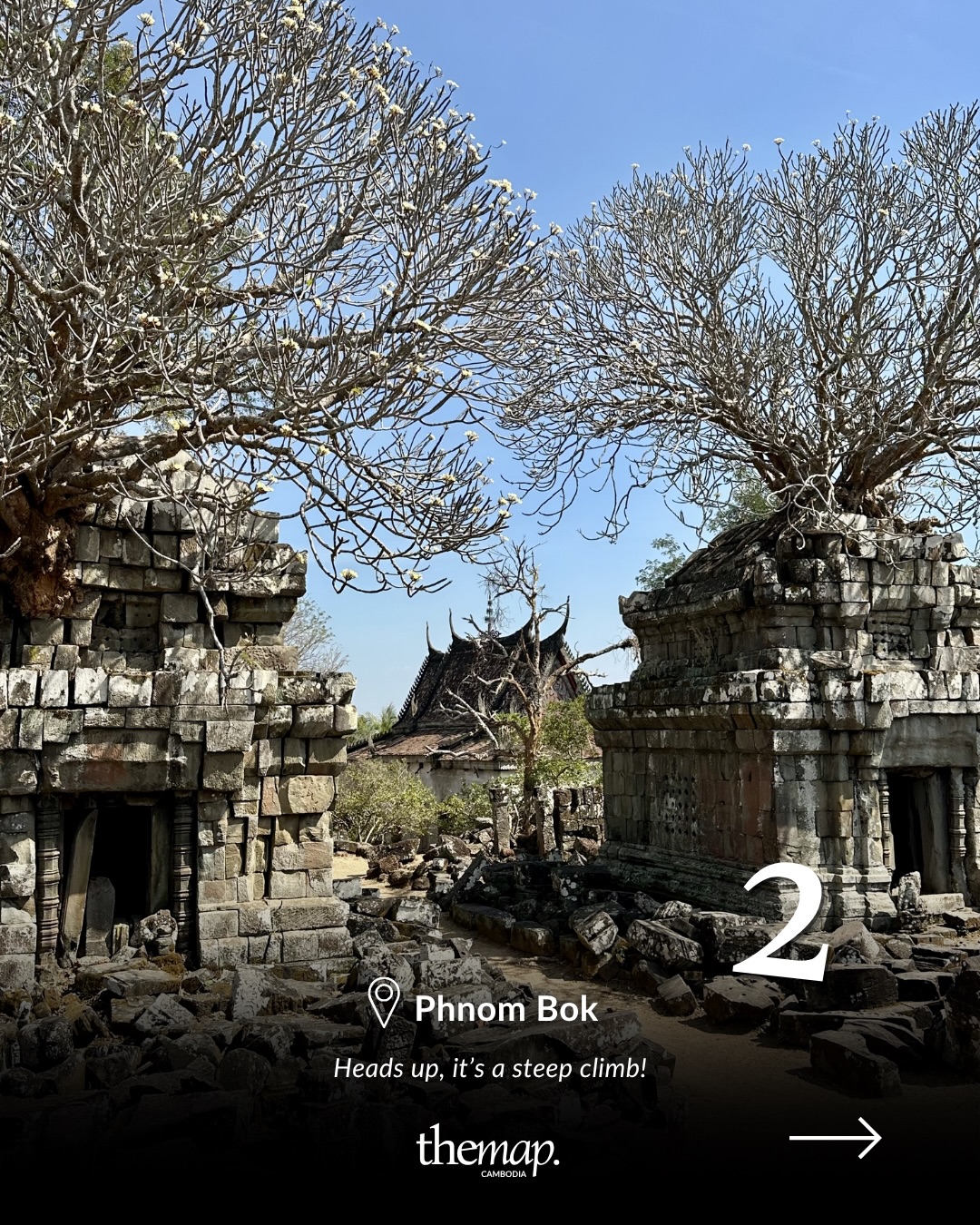
The climb is the catch. It is a steep ascent of several hundred steps to the top, so go early or late to avoid the heat, wear proper shoes and carry water. The reward is the view: rice plains, the distant line of Phnom Kulen to the north, and the Tonlé Sap to the south on a clear day.
Beng Mealea lies well outside the main circuit, around an hour's drive east of Siem Reap. Built in the 12th century and left largely unrestored, it has been swallowed by the forest — fallen sandstone blocks, dark galleries, and tree roots curling over finely carved balusters and lintels.
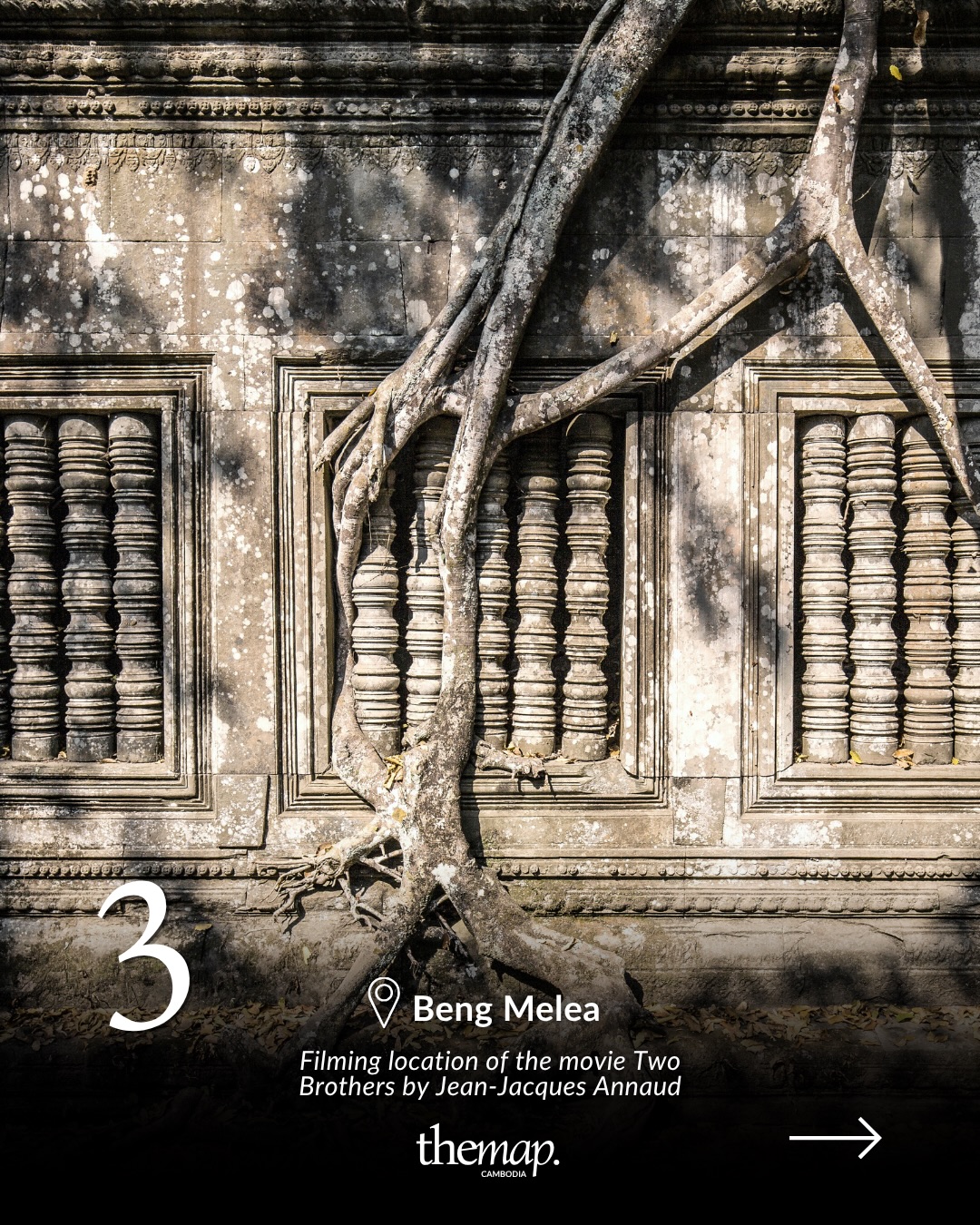
It is best known as the filming location for Jean-Jacques Annaud's 2004 film Two Brothers. A wooden walkway built for the production still helps visitors move through parts of the site. The atmosphere here is genuinely different from the polished temples closer to town — closer to how the ruins were first found. Note that it is a longer trip, so it works well as a half-day outing.
Ta Nei is a small temple tucked into the forest near the East Baray. It is one of the most secluded sites in the park, reached along a quiet track, and it sees only a trickle of visitors.
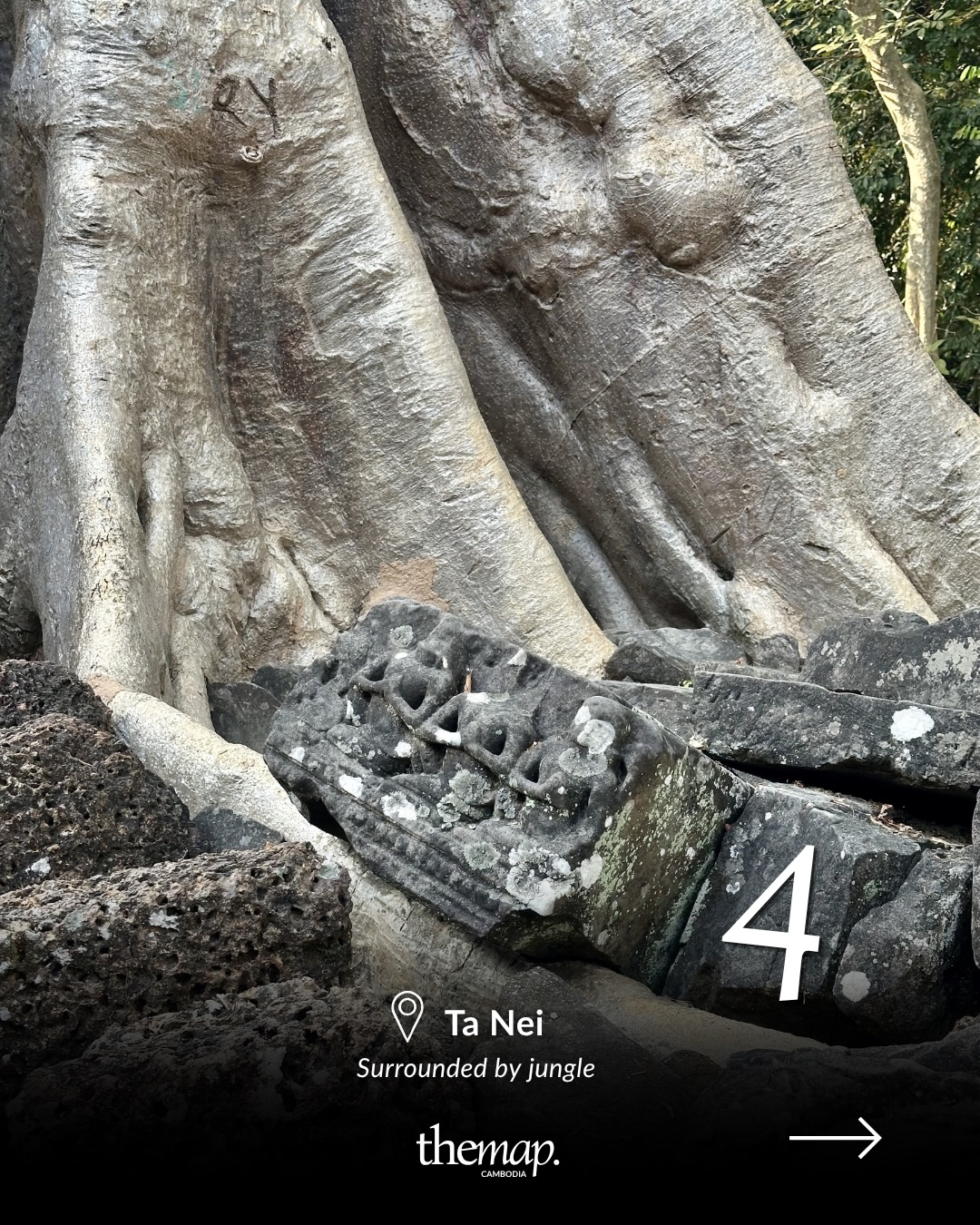
The draw is the setting: stone and jungle pressed together, with massive tree roots spilling over the masonry. It feels untended in the best sense — a place to wander slowly and have the carvings almost to yourself. Bring water and good footwear, and check current access before you go.
Phnom Krom is the southernmost of the three Yasovarman-era hilltop temples, set above the Tonlé Sap southwest of Siem Reap. The ruins are heavily weathered by centuries of wind off the lake, but that is not really why people come.
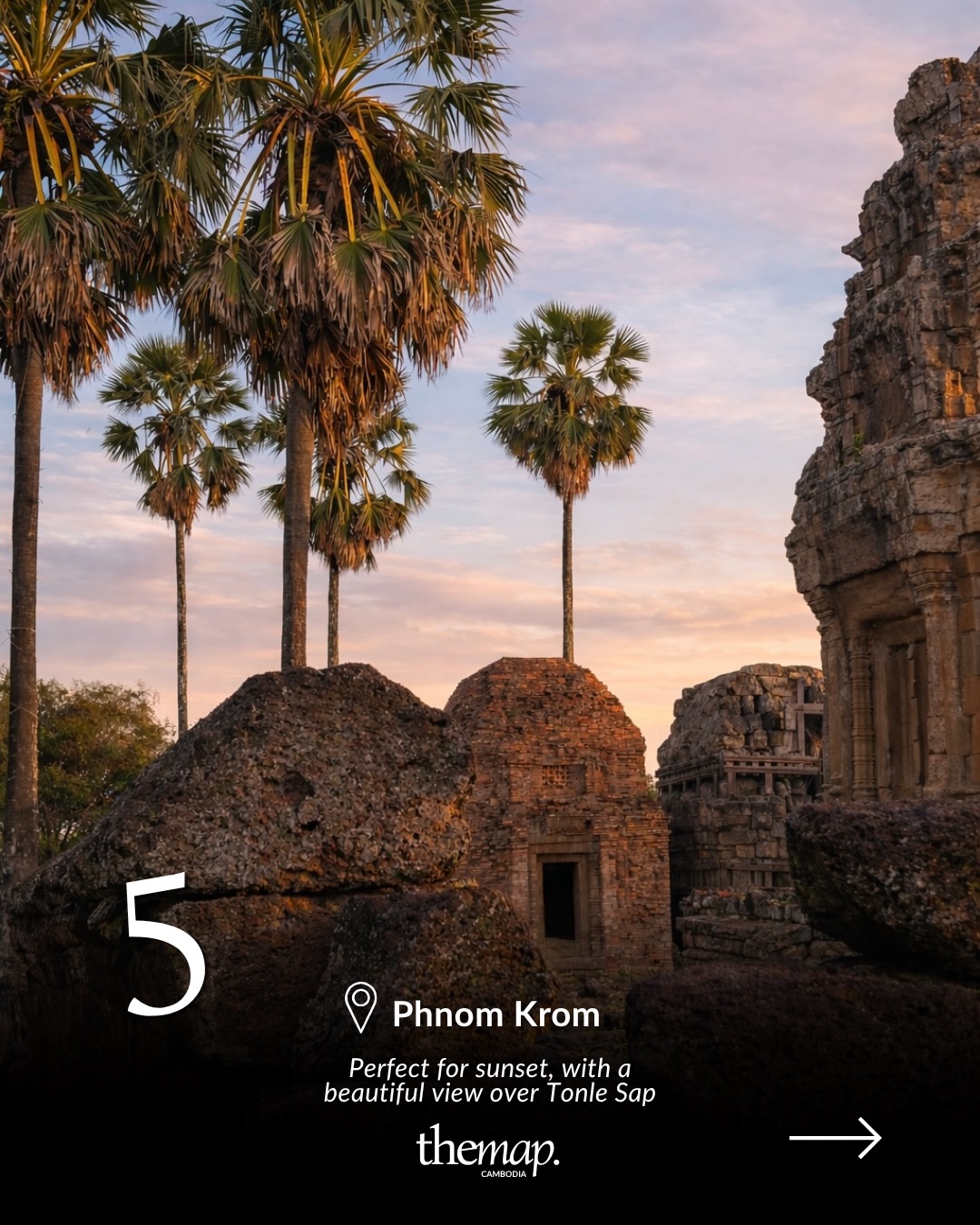
This is one of the best places in the area for sunset. From the top, the view stretches over the countryside and the waters of the Tonlé Sap, with sugar palms catching the last light. It is calmer than the busier sunset spots, which only adds to it. Plan your timing and the climb so you are up there before the light goes.
Banteay Samré is a flatland temple east of the main complex, less visited than its neighbours despite being well preserved. Step through its doorways and you find clean symmetry, layered galleries and detailed carvings in good condition.
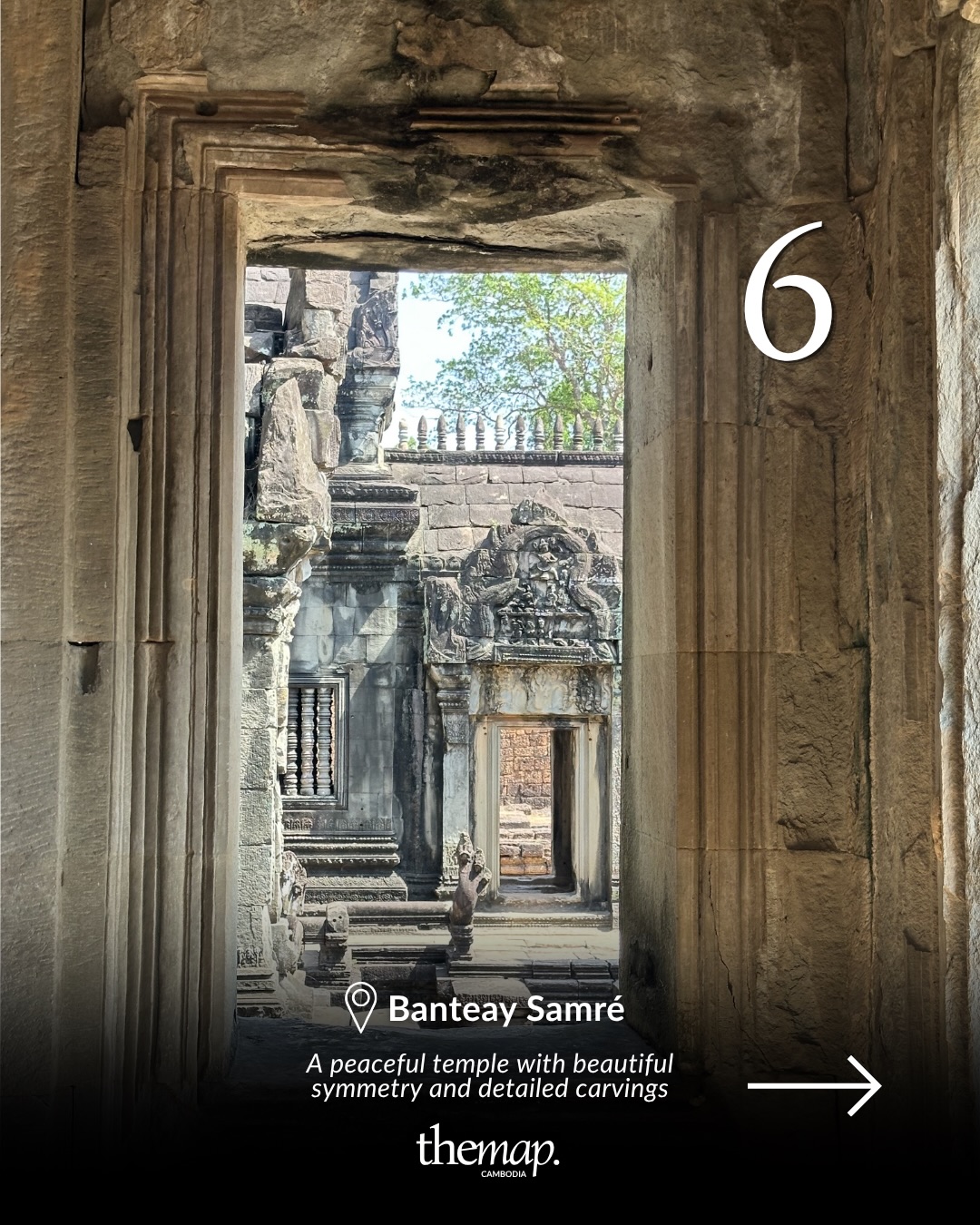
It is a peaceful, contained site — easy to appreciate without crowds, and a satisfying stop on the way to or from Banteay Srei or Phnom Bok. A good choice if you want refined Khmer architecture without the queues.
These six sites are spread out, so it helps to group them by direction. Phnom Bok and Banteay Samré sit in the same northeastern area; Phnom Krom is south toward the lake; Beng Mealea is a longer drive east. A car or tuk-tuk and an early start make the most of a day.
Most of these temples fall within the Angkor pass area, but rules and access can change — check the latest details and opening conditions before you set out. Carry water, sun protection and sturdy shoes, especially for the climbs.

Less searching, better places. Explore more of Siem Reap on The Map Cambodia.
From inspiration to the ground
Find the places and practical details for your next outing. Save your favourites to keep them close at hand.
Ten revealing facts about Angkor Wat: its scale, west-facing design, lost colours, equinox sunrise, water system and living communities.
ReadCompare four Siem Reap lunch restaurants by cuisine, setting, location, current service information and social impact.
ReadA practical guide to Angkor etiquette: clothing, worship, photography, stonework, marked routes, smoking, litter and responsible conduct.
Read