During Pchum Ben, a quieter street in Phnom Penh can lead to a very busy pagoda. Families arrive carrying food, people return to their hometowns, and the rhythm of a trip changes. Understanding why makes a visit far more meaningful.
Cambodia’s Pchum Ben public holidays fall on 10–12 October 2026. The religious observance lasts fifteen days; those three days off are not the whole festival. This guide explains what you are seeing, how to be a considerate guest, and where to start in Phnom Penh and Siem Reap.
When is Pchum Ben in 2026?
What to plan around
What it means for your visit
10–12 October 2026
The official three-day public holiday. Reserve important journeys ahead.
27 September–11 October 2026
The fifteen-day religious observance, culminating in Pchum Ben on 11 October.
Each pagoda’s own arrangements
There is no single citywide visitor timetable. Confirm the ceremony, time and welcome before setting out.
A Siem Reap provincial announcement, published on 24 September, places Kan Ben and Pchum Ben on 27 September–11 October 2026. Kan Ben therefore runs from 27 September to 10 October, followed by Pchum Ben day on 11 October.
The Royal Embassy of Cambodia’s 2026 calendar confirms the public holiday dates. The festival follows the Khmer lunar calendar, so dates change each year. Do not use an old blog’s September dates to book a 2026 trip.
What is Pchum Ben?
Pchum Ben is a Khmer Buddhist period of remembrance, when families honour relatives who have died. Offering food to monks and dedicating merit to the departed are central to its observance. It is also a time to return home and gather across generations.
The first fourteen days are generally known as Kan Ben, when families and communities take turns supporting their pagodas. The final gathering is Pchum Ben itself. The phrase is commonly explained through the ideas of gathering and rice offerings.
You may hear about preta, or hungry spirits. In religious explanations of the festival, offerings and merit can relieve the suffering of the dead. These are living beliefs with different interpretations and practices; they are best approached with curiosity rather than treated as a ghost-story attraction. Tourism Cambodia’s account includes explanations from Cambodian monks.
The festival also has particular emotional weight in a country whose families experienced war and mass loss. Scholar John Clifford Holt explores this relationship between remembrance, family and recent history in Caring for the Dead Ritually in Cambodia. A visitor does not need to know someone’s family history to respect the importance of the occasion.
What will you see at a pagoda?
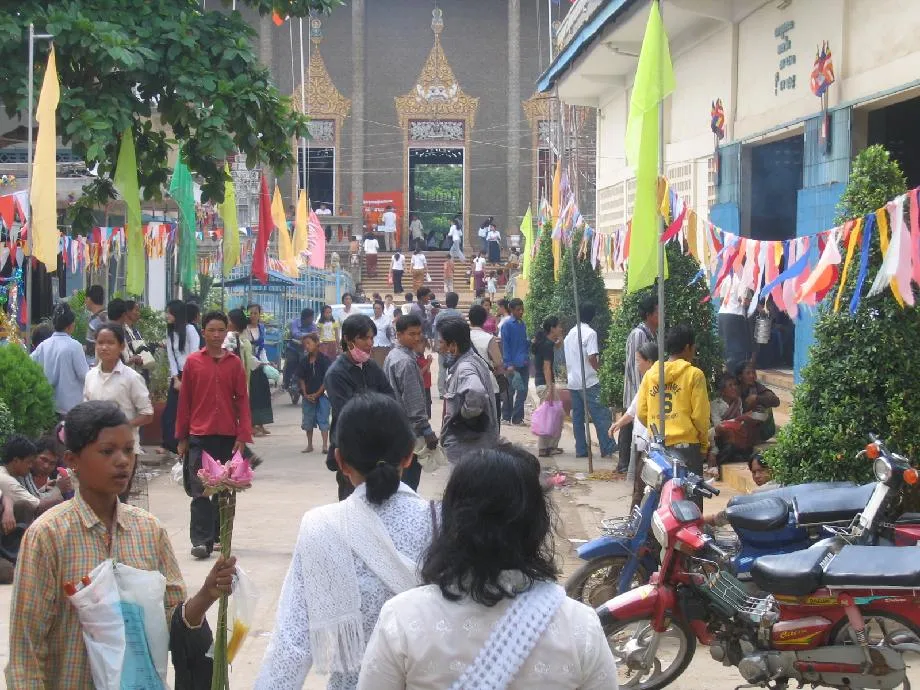
Food carried in containers or arranged on trays; families sitting together; chanting and offerings to monks. What happens depends on the pagoda, the day and the community.
One distinctive practice is bay ben: small rice offerings associated with the departed, made before dawn in some communities. The predawn timing is documented in Amansara’s cultural calendar, but its example is not a timetable for every Siem Reap pagoda. Do not simply arrive at 4am expecting a ceremony open to visitors.
For a first visit, we suggest asking about a morning gathering after daybreak. It is easier to find your way, understand where to sit and ask for guidance. If you specifically want to observe a predawn ritual, arrange it with someone who knows that pagoda and confirm your transport in advance.
Food is part of family life as well as the offering. Look for num ansom, sticky-rice parcels wrapped in banana leaves, with fillings that can include banana or pork and beans. Empowering Youth in Cambodia describes families making these cakes together for Pchum Ben. Ask a seller what is inside; food already set out as an offering is not a tasting display.
How to experience Pchum Ben in Phnom Penh
Choose a pagoda near where you are staying and leave room to linger. Trying to collect several ceremonies in a morning gives you less time to understand any of them.
Wat Ounalom — convenient from Riverside. On Sisowath Quay, this established monastery is a practical place to enquire if you are staying around the riverfront. Ask a caretaker whether visitors may sit in on that day’s gathering and which entrance to use. Afterwards, keep the rest of the morning flexible with our Riverside guide.
Wat Langka — convenient from BKK1. Near Independence Monument, it makes sense for travellers based in the southern part of central Phnom Penh. Holt documented Pchum Ben observances here, including early rice offerings. That historical account establishes the connection with the festival; it does not confirm a 2026 schedule. Ask about current arrangements rather than relying on regular meditation times.
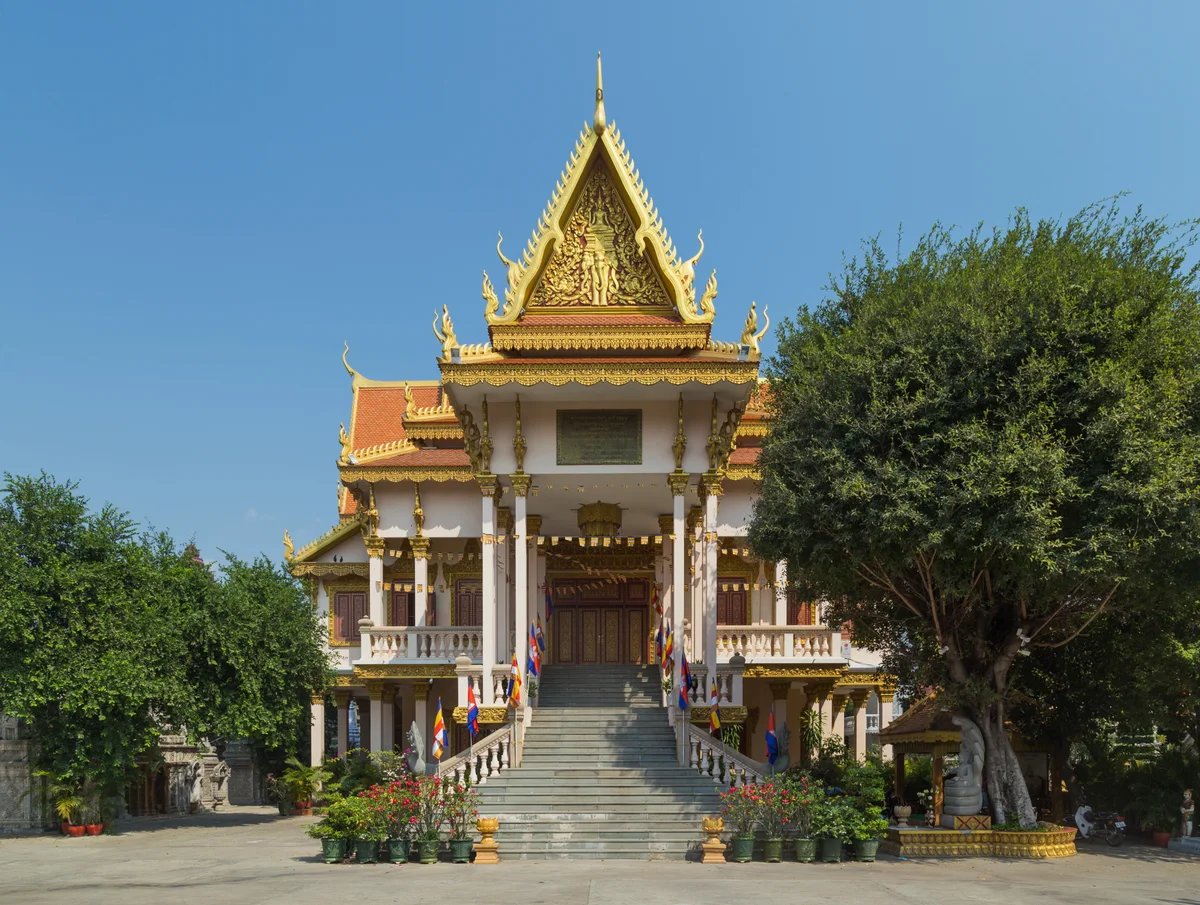
The main sanctuary of Wat Langka, framed by trees in Phnom Penh
A simple plan: ask the day before, visit one pagoda at the agreed time, then have breakfast somewhere you have confirmed is open. The city may feel unusually quiet as residents travel home. Treat that change of pace as part of the holiday, while checking individual businesses rather than assuming everything is closed.
How to experience Pchum Ben in Siem Reap
Give the living pagodas in town their own time, alongside your Angkor visits. You do not need to add another full sightseeing day: a confirmed morning visit can fit into a slower day in Siem Reap.
Wat Preah Prom Rath — a central starting point. Near the Old Market and river, this functioning monastery is easy to include if you are staying in central Siem Reap. Hello Angkor documents its courtyard, Buddhist imagery and prayer hall. During the festival, ask where visitors can wait and whether a gathering is open to guests. Its convenient location is the reason to start here; no specific 2026 ceremony time has been verified.
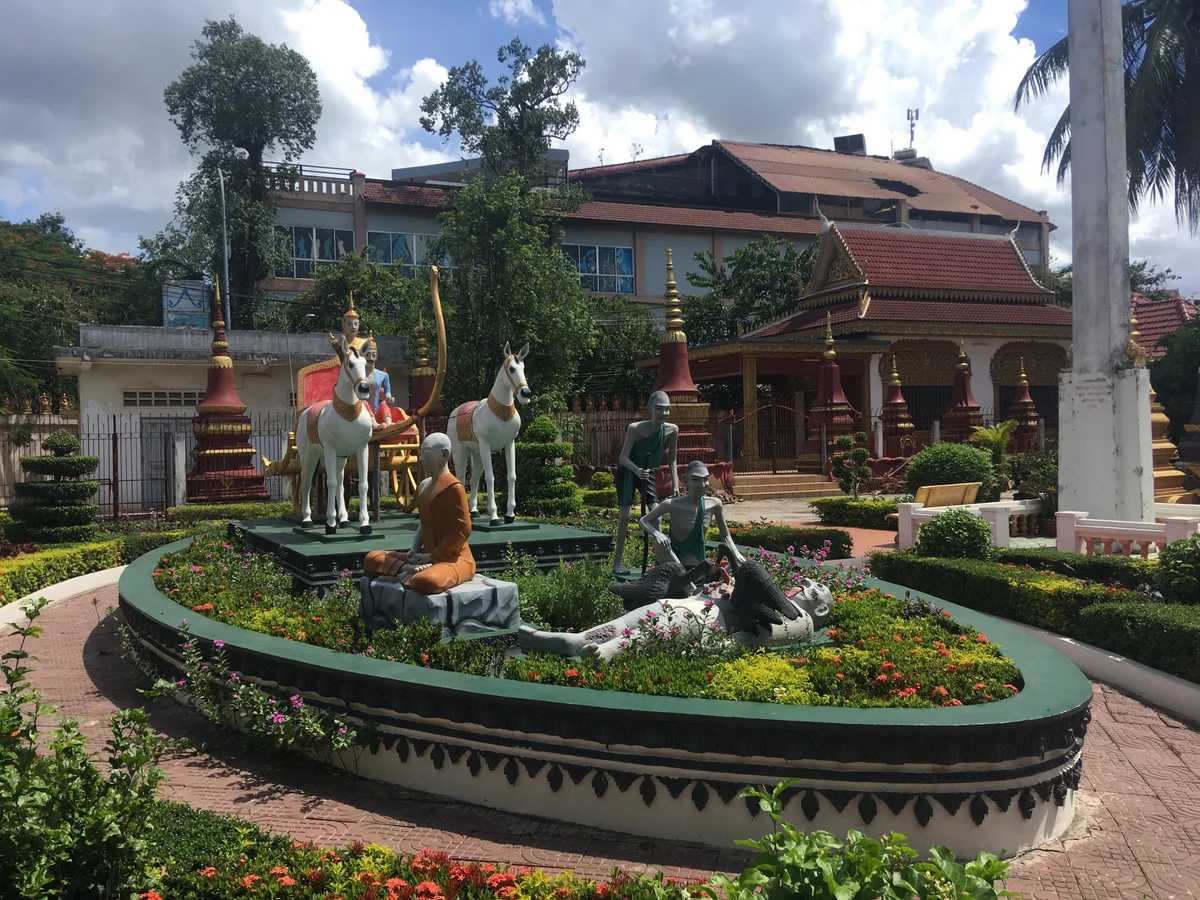
Buddhist sculptures and gardens in the courtyard of Wat Preah Prom Rath
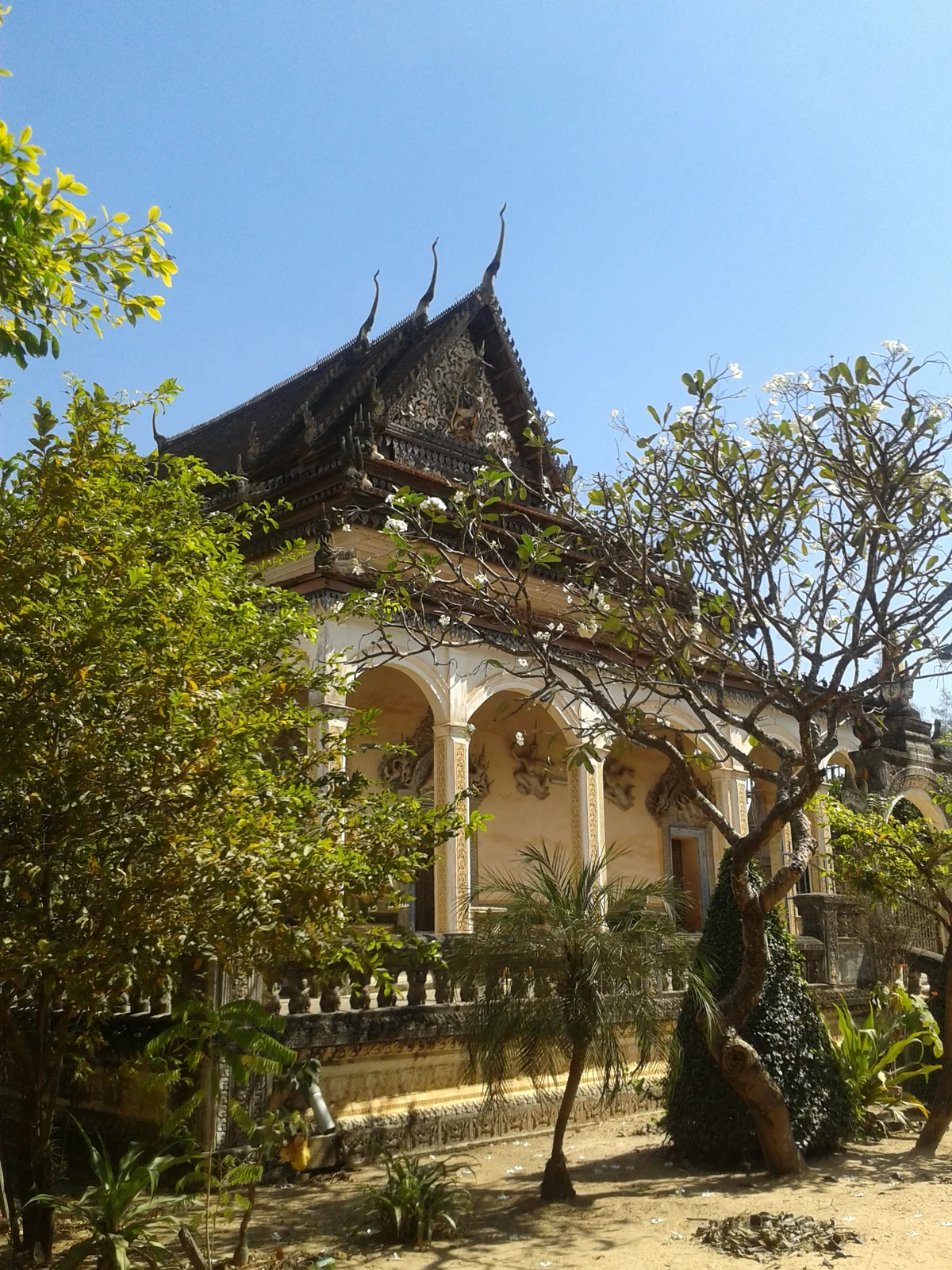
Wat Bo — an option east of the river. This active monastery offers another starting point for travellers staying in the Wat Bo area. It is also known for its older sanctuary and murals, although conservation work means you should not assume every interior is accessible. Let the community’s worship determine your visit; architecture can wait.
If your hotel can introduce you to a local guide who knows a pagoda, ask for help understanding the ceremony. Avoid an itinerary that promises access to private family rituals. For the rest of your stay, our Angkor days guide helps keep temple visits from filling every available morning.
Cover shoulders and knees, preferably with long trousers or a long skirt. Many worshippers wear white; modest clothing matters more than buying a special outfit.
Remove shoes and hats before entering the worship hall, following signs and local practice. Keep doorways clear.
Sit where invited, with feet tucked away from monks and Buddha images. Keep your voice low and your phone silent.
Ask before photographing people or monks. Avoid flash, close portraits during prayer and walking between worshippers for a better angle.
Ask how to make an offering. A caretaker can explain what is useful and where it belongs. Do not copy a ritual you have not understood or assume a donation purchases access.
Respect monastic boundaries. Women should not touch monks or their robes; ask how to place or pass an offering appropriately.
A useful question is: “May I sit and observe? Where would you like me to go?” Waiting for the answer is part of being a good guest.
Will Pchum Ben affect your travel plans?
Book essential intercity journeys ahead and confirm holiday opening hours directly with hotels, restaurants and attractions. Leave extra margin before a flight. October also calls for flexible outdoor plans; our rainy-season guide can help.
For 2026, AKP reports that Phnom Penh plans 600 free buses from 9–13 October to support holiday travel. This is a separate transport window, not a change to the holiday dates. Check official departure arrangements before relying on that service.
Questions visitors often ask
Can foreigners visit pagodas during Pchum Ben?
Ask at the specific pagoda. A respectful visit may be possible, but an active religious occasion does not guarantee unrestricted access to every room or ceremony.
Do I have to bring food?
Ask first. If you want to contribute, let someone at the pagoda explain what is appropriate. Observing quietly with permission is a better start than arriving with unsuitable offerings.
Must I visit seven pagodas?
No visitor checklist is required. Some traditions describe visits to seven pagodas; that does not turn the festival into a route you must complete. One thoughtful visit is enough for a first encounter.
Should I choose Phnom Penh or Siem Reap for Pchum Ben?
Keep the city that already fits your trip. Both have active pagodas. A local introduction and a confirmed time are more useful than changing cities in search of a supposedly better celebration.