What Is a Krama? Cambodia's Everyday Cloth Explained
A short guide to the krama, the checked cloth woven into Cambodian daily life, and the practices UNESCO recognised in 2024.
A krama is easy to recognise and difficult to reduce to one definition. The checked cloth appears around shoulders and heads, beside market stalls, at work, at home and during ceremonies. Calling it a Cambodian scarf is not wrong, but it leaves most of the story out.
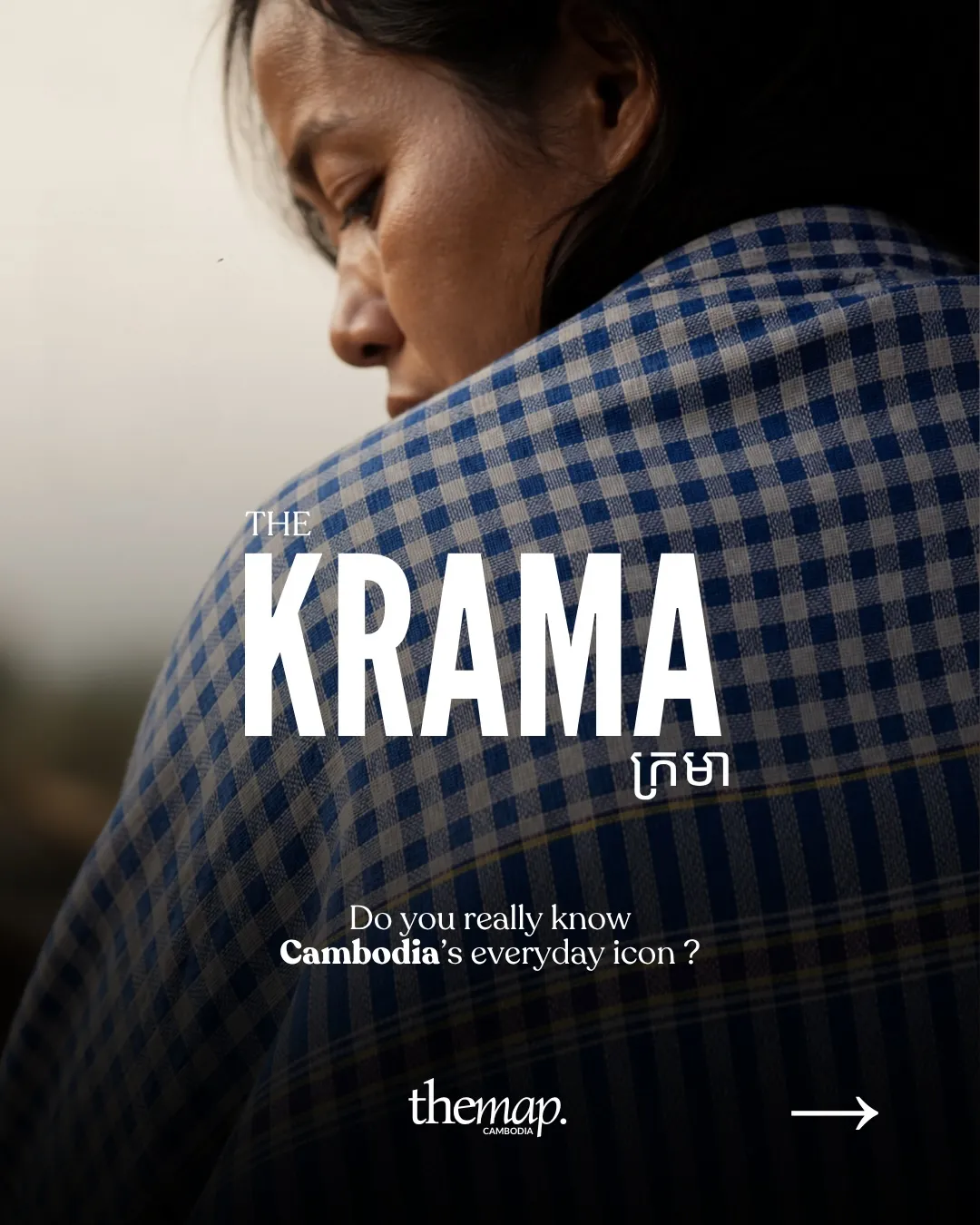
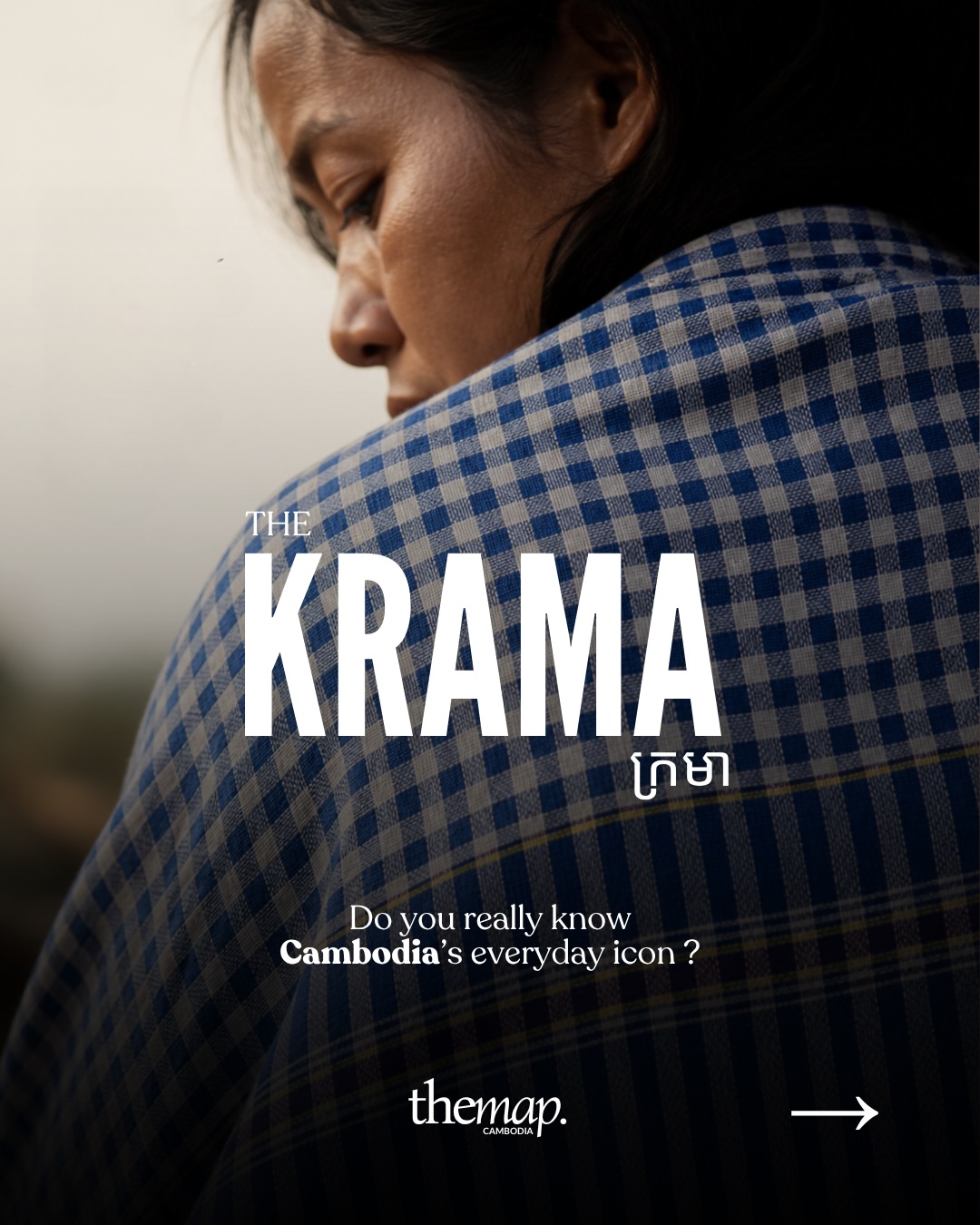
A woman wrapped in a blue checked krama
What is a krama?
A krama is a rectangular woven cloth, traditionally made from cotton or silk and often identified by its grid-pattern motifs. There is no single colour combination that defines every krama.
Its meaning comes as much from use as appearance. The same piece of cloth can become a scarf, belt, head covering, blanket or a simple way to carry things. It can protect someone working in the sun, wrap a child or move from an ordinary day into a ceremony or celebration.
That flexibility is why the krama feels less like a special-occasion costume and more like part of Cambodia's everyday visual language.
One cloth, many ordinary uses
The krama follows daily life rather than waiting for a formal moment. It is practical because it can be folded, tied, carried and reused in different ways.
UNESCO's description includes uses as varied as a scarf, belt, bandana, lower garment, decorative cloth, blanket and hammock for children. It also records the krama's place in rituals, festive events, food preparation and health care.
This does not mean every krama has a prescribed purpose. It means the cloth has remained useful across generations because people adapt it to the moment in front of them.
The knowledge behind the pattern
The finished textile is only the visible end of a longer process. Traditional production involves preparing fibres and dyes, setting up and maintaining a handloom, weaving a consistent pattern and passing those skills on.
The UNESCO nomination describes women as the main weavers and important transmitters of this knowledge. Men also take part in the production chain, including growing and harvesting cotton, collecting dye materials and maintaining looms. Today, professional weaving groups, producers and educational organisations also help teach the related skills.
Not every krama sold today is made in exactly the same way. Materials, dyes and production methods vary. If you are buying one and want to understand what you are holding, ask where it was woven, what fibre was used and who made it. A specific answer is more useful than a vague claim of authenticity.
What UNESCO recognised in 2024
In December 2024, the cultural practices and expressions linked to the krama were inscribed on UNESCO's Representative List of the Intangible Cultural Heritage of Humanity.
That wording matters. UNESCO did not simply recognise a checked textile as an object. The inscription covers the knowledge, skills, uses and cultural expressions surrounding it: how the cloth is produced, how it moves through daily life and ceremonies, and how communities transmit what they know.
The decision also records the krama's contribution to Cambodian social and cultural identity. Fifteen communities and associations took part in the nomination process, alongside weaving communities, public bodies, NGOs, researchers and other organisations.
How to look at a krama differently
For a visitor, the most useful starting point is attention rather than a list of rules. Notice how people tie the cloth for different tasks. Look at the density of the weave, the fibre and the variation between patterns. If you buy one, ask about its maker and production instead of treating every checked cloth as interchangeable.
You do not need to turn the krama into a costume to appreciate it. Wear it simply, use it practically and stay curious about the work behind it.
The next time you see one, look beyond the pattern. A krama carries thread, but it also carries decisions, gestures and skills learned over time.