Photo credit
Angkor Wat
Culture · Temple · Angkor Archaeological Park
Verified practical guide
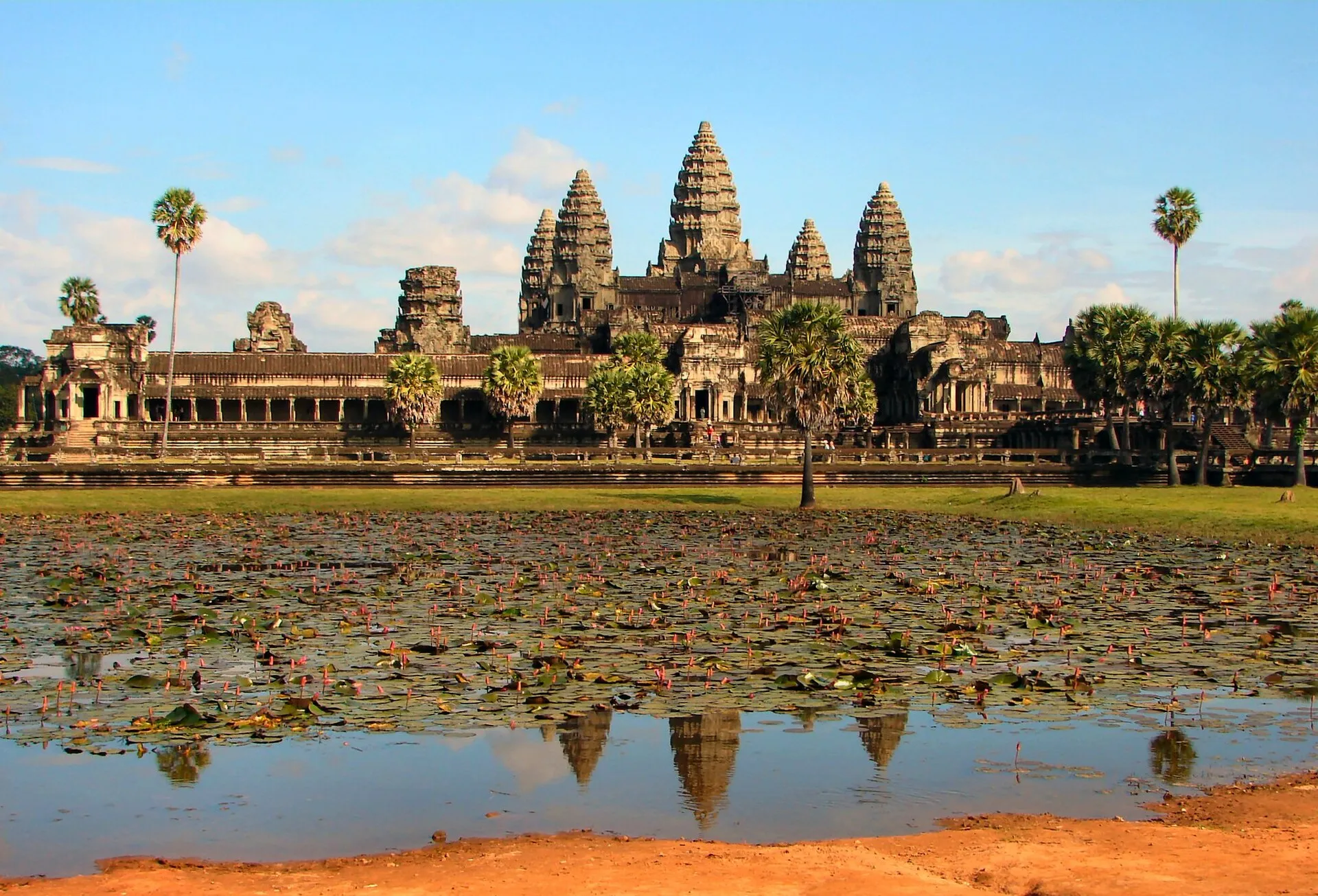
Angkor’s monumental centrepiece: a vast 12th-century temple where architecture, bas-reliefs and living Buddhist devotion still meet.
- APSARA hours
- Temple 5:00 am–5:30 pm · Bakan 7:40 am–5:00 pm
- Suggested time
- 2–3 hours
- Route
- Small Circuit
Understand the site
Built under Suryavarman II between 1113 and 1150, Angkor Wat was conceived as a state temple dedicated to Vishnu. APSARA describes it as the largest monument in the Angkor group, framed by a moat and an outer rectangle of roughly 1,500 by 1,300 metres.
Its west-facing plan is unusual. APSARA links this orientation to funerary ritual and recommends reading the main bas-reliefs anti-clockwise. The site later became a major Theravada Buddhist pilgrimage centre and remains sacred today.
What not to miss
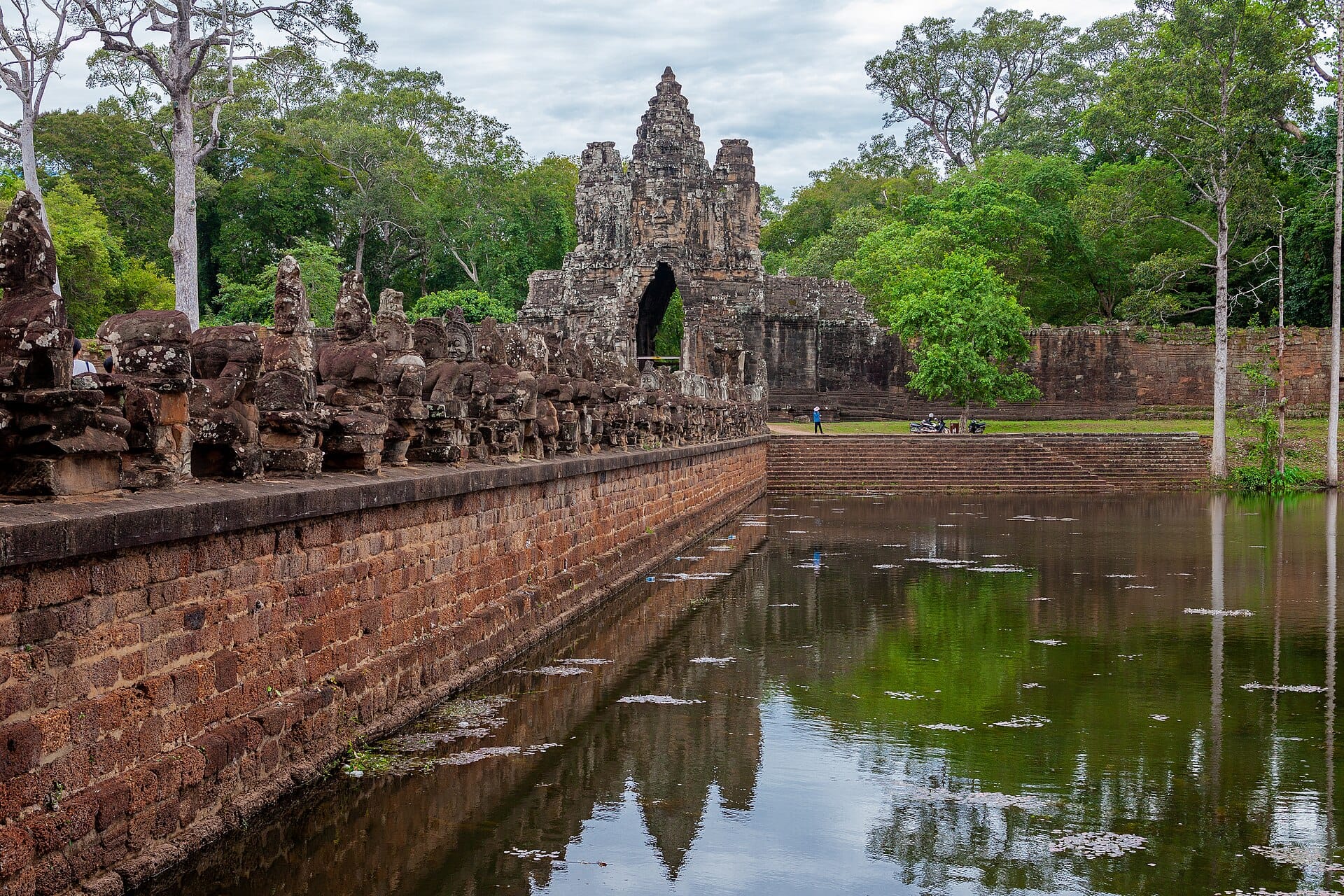
The western approach
Cross the broad moat and long sandstone causeway before the towers fully reveal themselves.
The bas-relief galleries
More than 1,000 square metres of carved panels combine mythological and historical scenes.
The Bakan
The upper sanctuary shows the temple’s transformation from a Vishnuite monument into a Buddhist sacred place.
Visit advice
Give the monument its full 2–3 hours. Sunrise is only one moment of the visit: the galleries and upper levels deserve unhurried time after the first light.
APSARA states that the Bakan closes on Buddhist holy days. Hats are not allowed there; visitors must dress respectfully. Children under 12 and pregnant women may not climb to the top for safety reasons.
Angkor is a sacred site
Cover shoulders and knees, respect worshippers and monks, climb only where permitted, do not touch carvings and take all litter away.
Read the official visitor codeFacts and hours checked against APSARA National Authority · checked 25 August 2026.
Seen on our Instagram

Keep exploring
One place can be the start of your day.