All articles
10 Angkor Wat Facts That Change How You See the Temple
Ten revealing facts about Angkor Wat: its scale, west-facing design, lost colours, equinox sunrise, water system and living communities.
Ten revealing facts about Angkor Wat: its scale, west-facing design, lost colours, equinox sunrise, water system and living communities.
Angkor Wat is one of the most recognisable buildings on Earth. Yet the familiar five-tower silhouette hides a more complex story: a royal capital built around water, a Hindu state temple that became a major Buddhist pilgrimage site, and a living landscape where communities still farm and worship today.
This guide expands our Instagram carousel into ten details worth knowing before you visit.
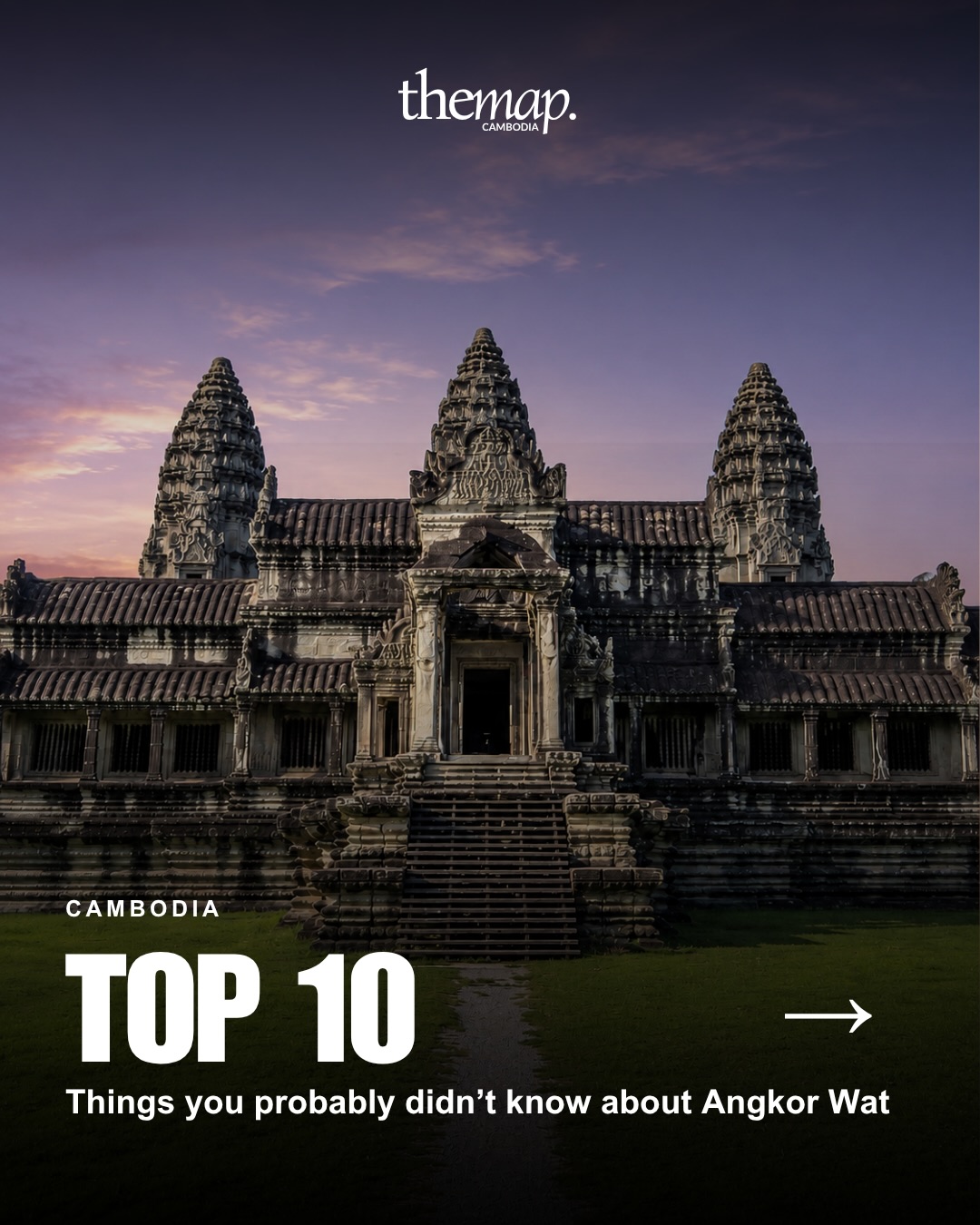
Angkor Wat is often described as the world's largest religious monument. The whole rectangular complex measures roughly 1,500 by 1,300 metres and covers close to 200 hectares when its broad moat is included. Even the space inside the outer enclosure wall extends across about 82 hectares.
That scale is easy to miss from the classic sunrise viewpoint. What looks like one monumental building is actually a carefully layered landscape of causeways, galleries, libraries, ponds, courtyards and towers.
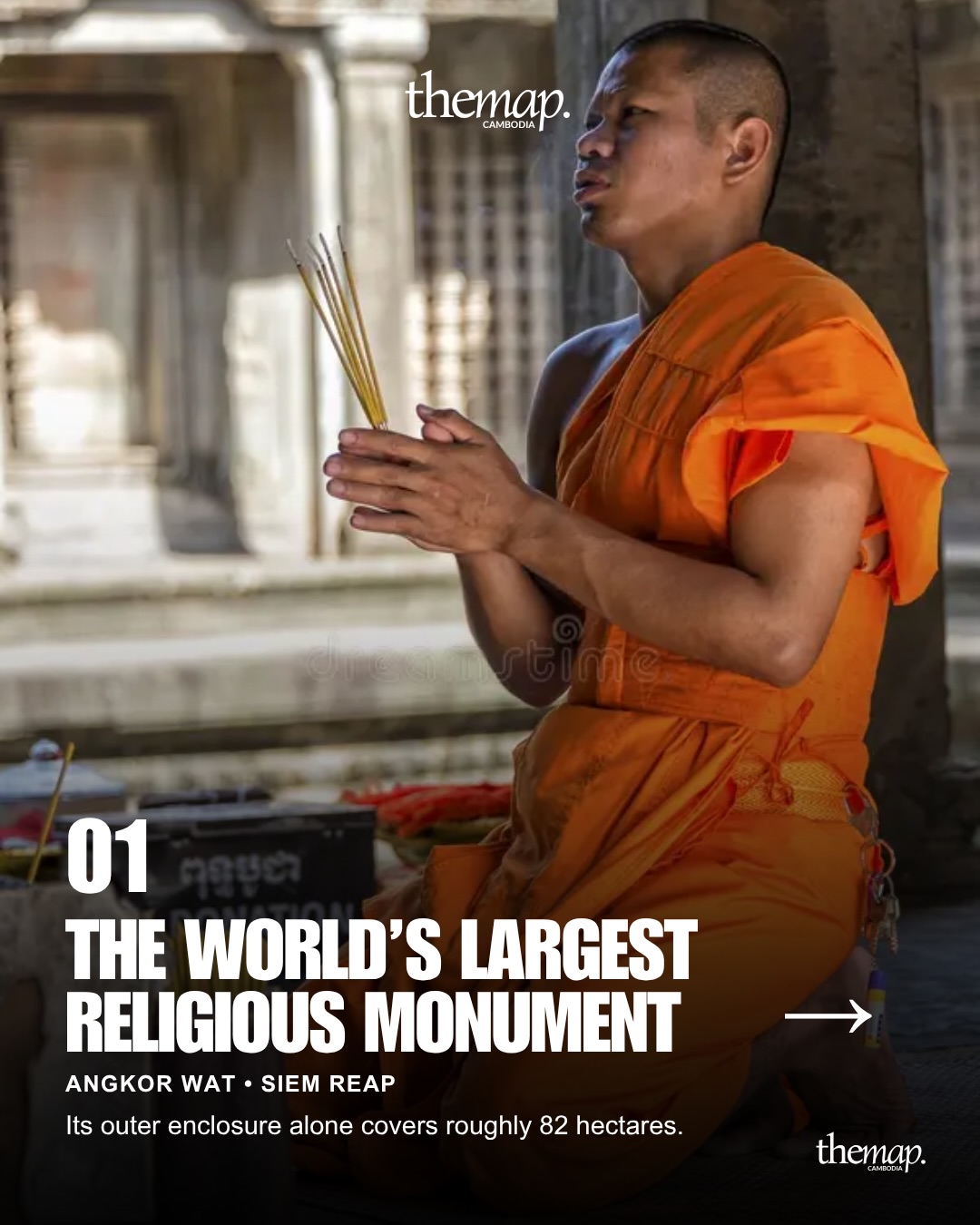
King Suryavarman II commissioned Angkor Wat in the first half of the 12th century. APSARA dates its construction to roughly 1113–1150 and estimates that the intensive building work took around thirty years.
It was not conceived as an isolated sanctuary. The temple stood within a royal and urban setting, and its architecture projected both religious meaning and imperial power.
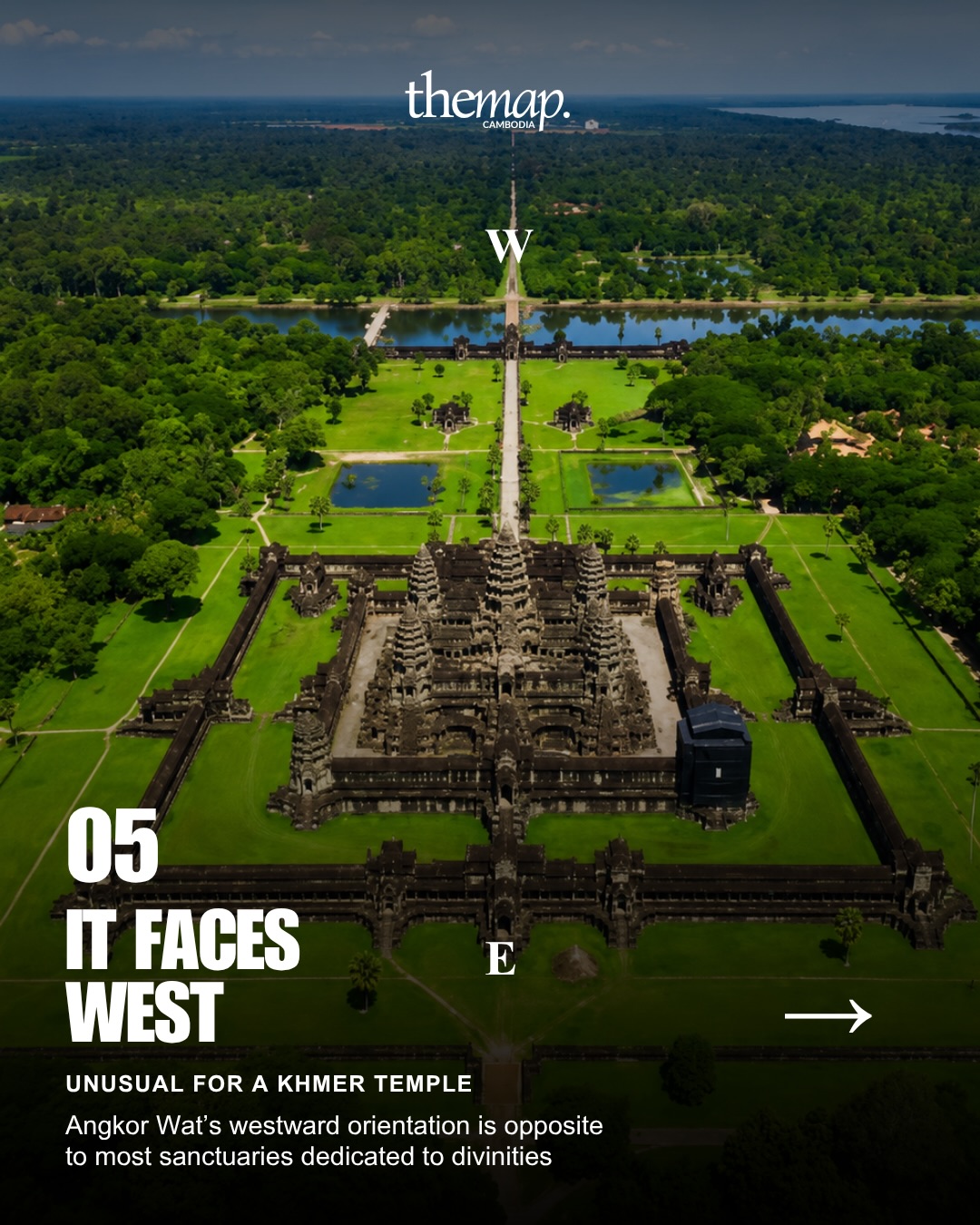
Most Khmer sanctuaries dedicated to divinities face east. Angkor Wat's principal entrance is on the west, reached by the long sandstone causeway across the moat.
Its orientation has inspired several interpretations. It may relate to the temple's dedication to Vishnu, who is associated with the west, while the reverse direction of its narrative bas-reliefs has also encouraged funerary readings. It is safer to see the westward plan as a deliberate and unusual design choice than to reduce it to one settled explanation.
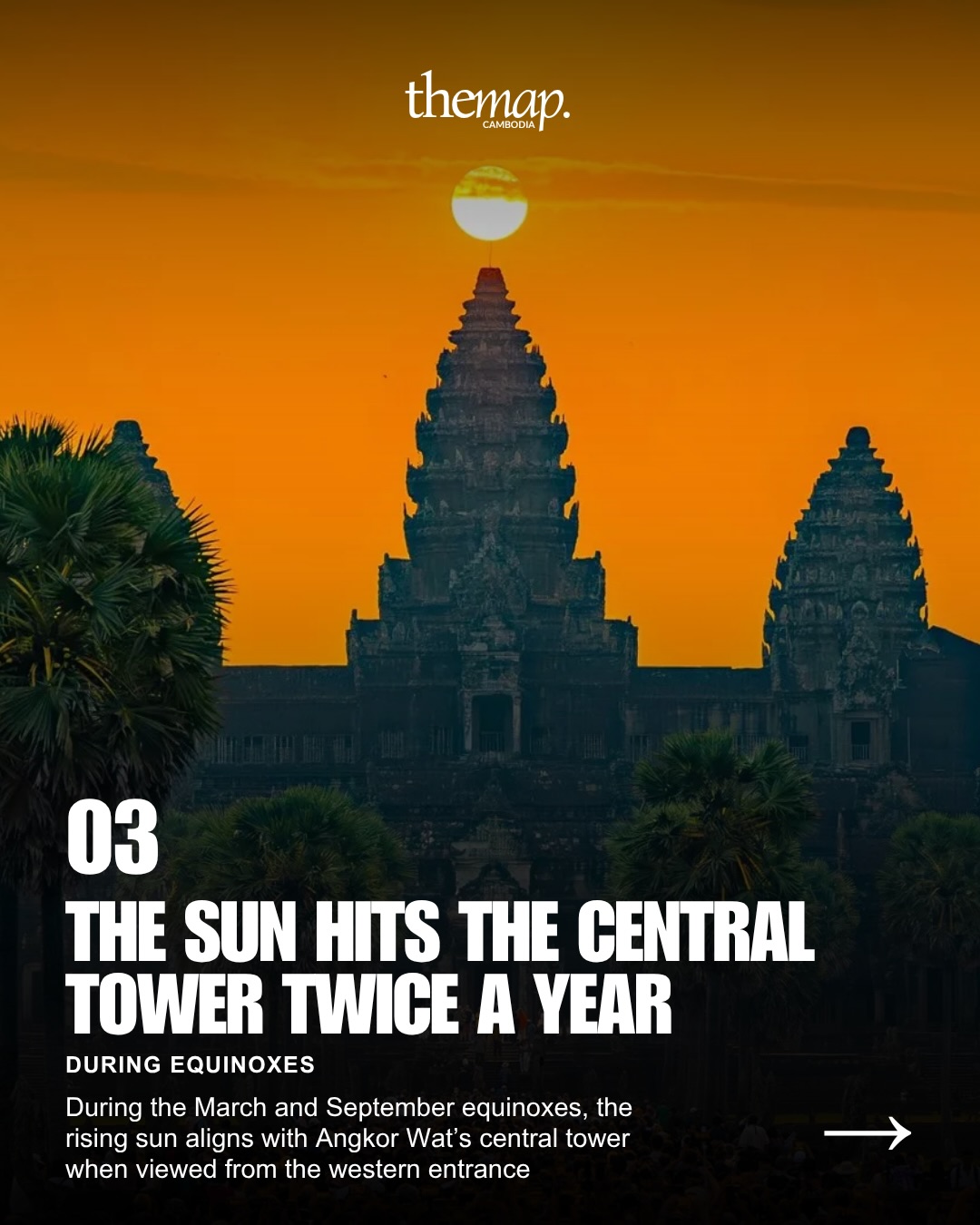
Around the March and September equinoxes, the rising sun appears above Angkor Wat's central tower when viewed from the main western approach. APSARA describes the event as the result of the temple's architectural, mathematical and astronomical planning.
The exact date and visibility vary slightly with the year and weather, but the alignment happens twice annually. It draws large crowds, so witnessing it is as much a shared cultural event as a quiet sunrise.
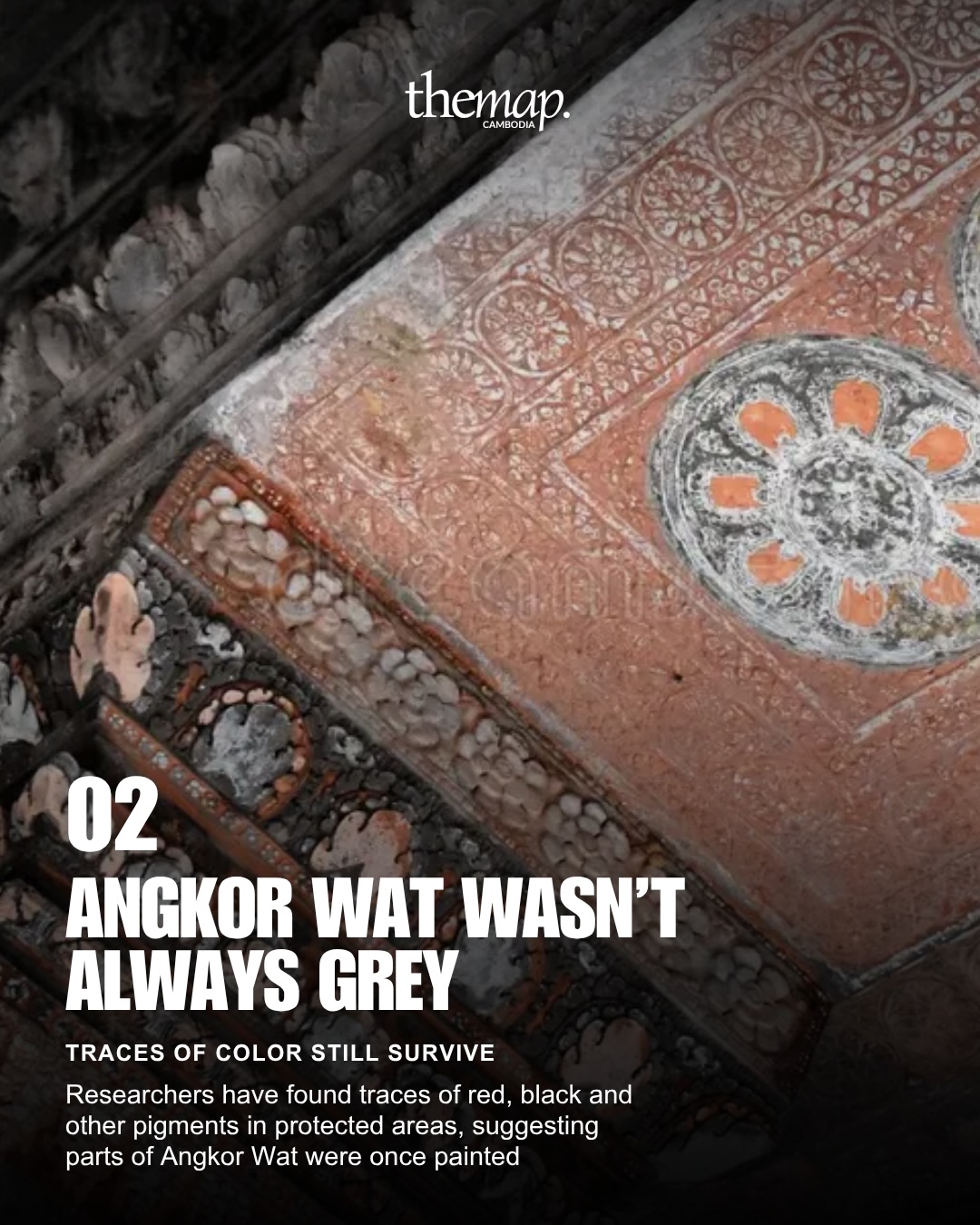
Conservation studies have identified traces of colour on Khmer monuments, including red and ochre pigments, white and red lead, cinnabar and gold. At Angkor Wat, traces of gold remain on bas-reliefs and important religious images.
Not every surviving layer is necessarily original: some lacquer, paint and gilding came from later restorations and offerings. Still, the evidence changes how we imagine the monument. Stone, sculpture and colour once worked together far more vividly than the weathered sandstone suggests.
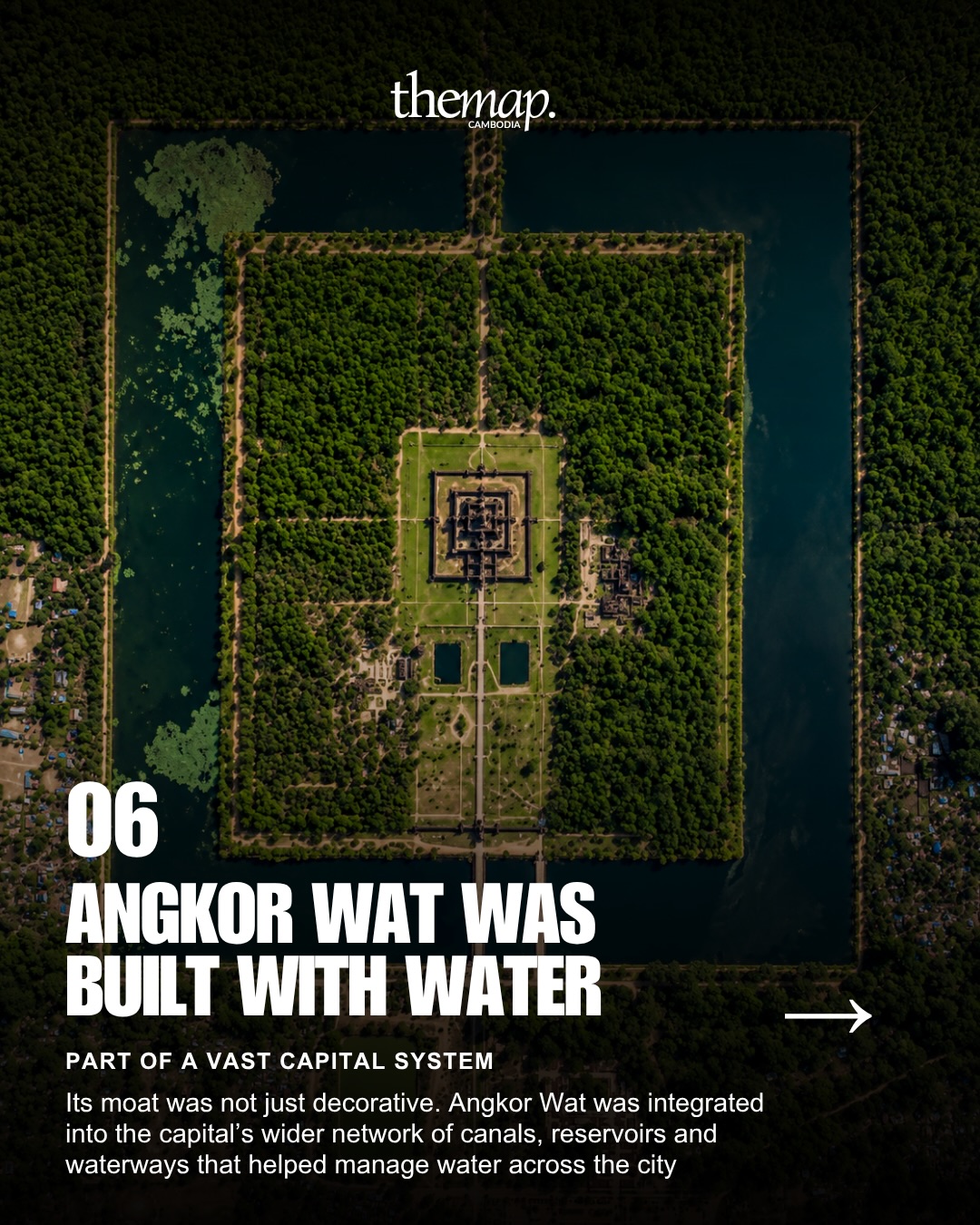
Angkor Wat's moat is visually striking, but it also belongs to the much wider hydraulic landscape of Angkor. Across the ancient city, canals, reservoirs, dykes and basins helped manage water through dramatic wet and dry seasons.
Water also contributes to the stability of the sandy ground beneath the monuments. Modern conservation work still treats the ancient hydraulic system as essential infrastructure, not as a decorative backdrop.
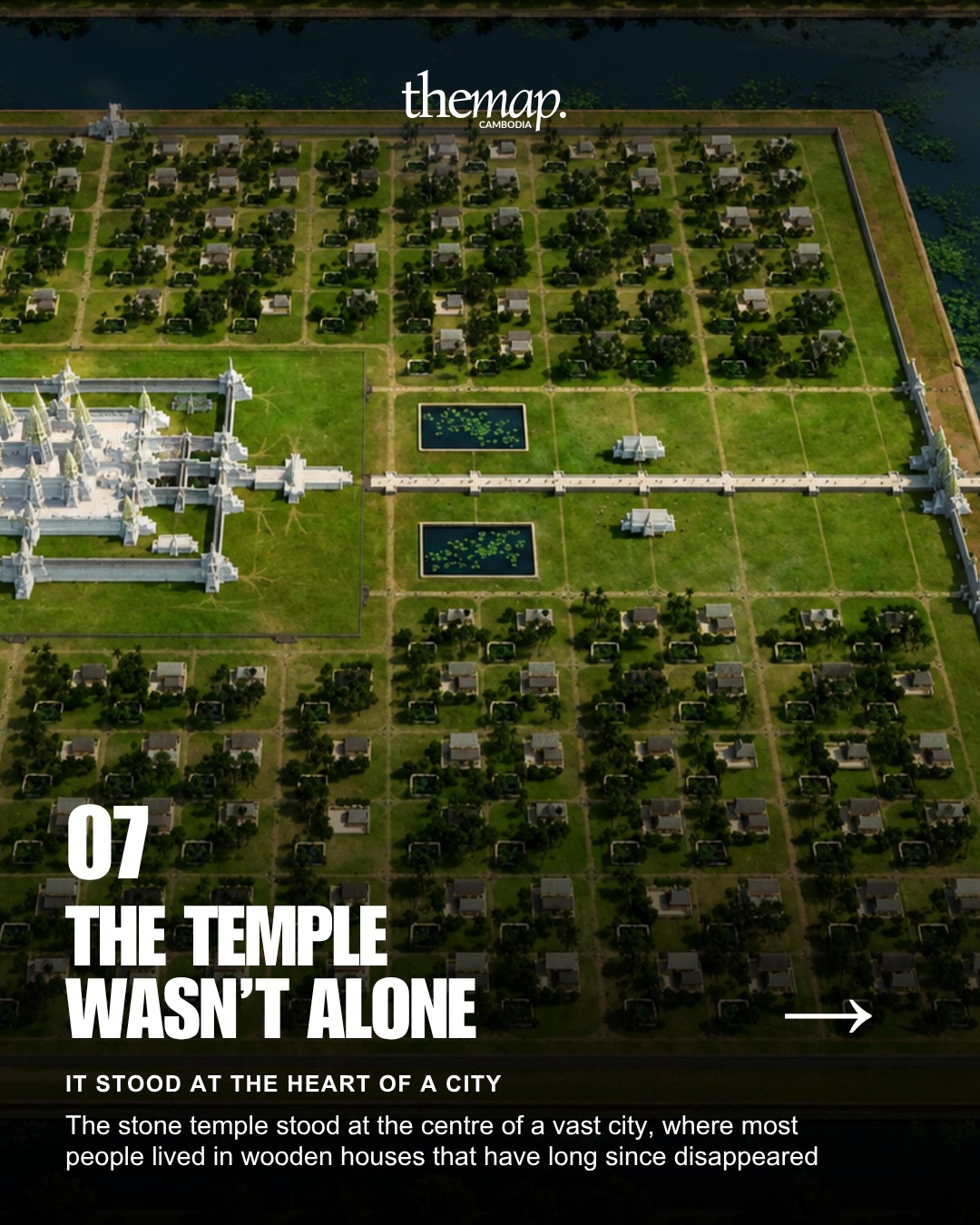
The durable sanctuaries survived, but most homes and everyday structures were built from wood and other perishable materials. That is why today's forested park can look emptier than the medieval capital really was.
Archaeology, mapping and LiDAR research have revealed urban plans, roads, waterworks and occupation across a vast area. Angkor Wat was not alone in the jungle; it was embedded in one of the premodern world's great urban landscapes.
Angkor Wat's long bas-reliefs unfold like a stone narrative. They depict Hindu epics and cosmology, including the Battle of Kurukshetra and the Churning of the Sea of Milk.
Because of the temple's unusual orientation, the principal relief cycle is traditionally followed anticlockwise — the reverse of the usual ritual direction. Slow down here: the details in clothing, weapons, movement and expression reward much more than a quick pass.
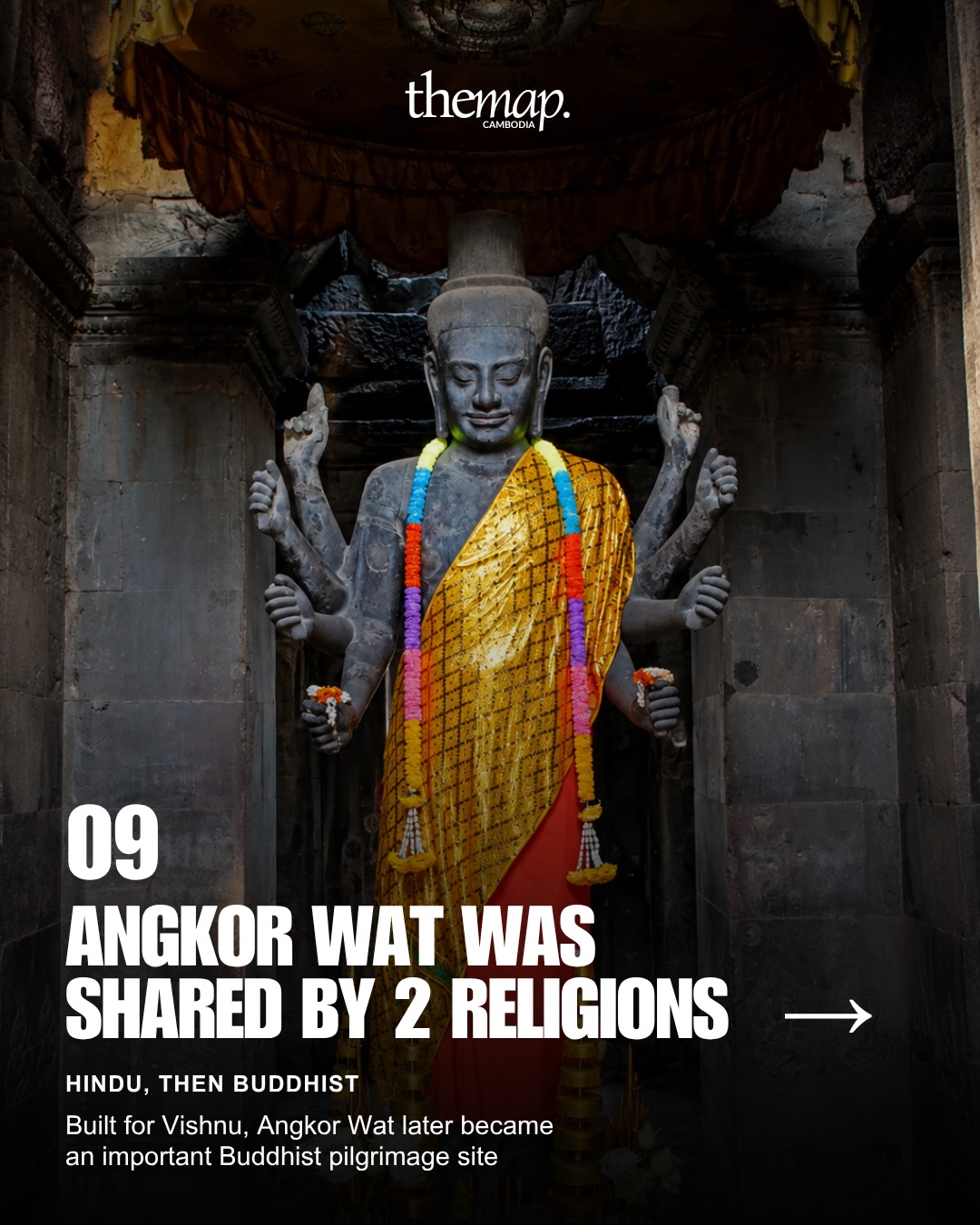
Suryavarman II's temple was originally dedicated to the Hindu god Vishnu. In the Middle Period, particularly from the 16th century, Angkor Wat became an important Buddhist pilgrimage destination for Cambodians and visitors from across Asia.
That religious continuity matters. Angkor Wat is not only an archaeological object; monks, worshippers and pilgrims still give the temple a spiritual life.
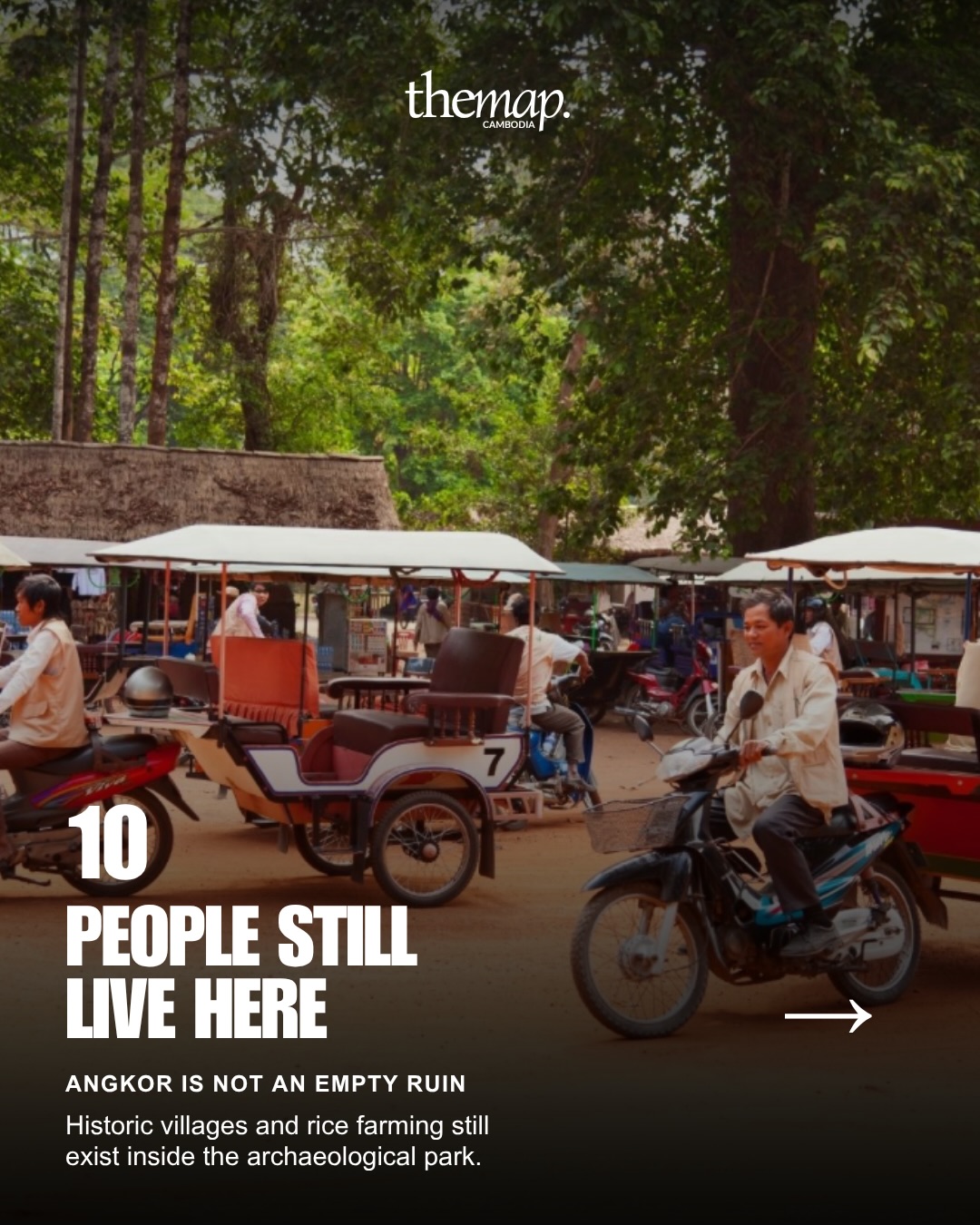
The wider Angkor Archaeological Park is inhabited. UNESCO notes that villages are scattered across the protected area and that local communities continue practices including rice cultivation, ceremonies and the veneration of temple deities.
Seeing Angkor as living heritage changes the visitor's role. The park is not an empty ruin or a film set: it is a protected cultural landscape shared with people whose daily lives and family histories are tied to it.
Give Angkor Wat more time than the sunrise photo. Walk the galleries slowly, look for surviving colour, notice how the moat and causeway organise your approach, and remember that active religious spaces deserve the same respect as any living place of worship.
Before booking your stay, compare one, two or three days at Angkor and the number of nights each pace needs.
Continue planning with our Siem Reap guide, discover six quieter temples near Angkor Wat, or explore Cambodia's UNESCO World Heritage sites.
From inspiration to the ground
Find the places and practical details for your next outing. Save your favourites to keep them close at hand.
Six quieter temples to visit around Siem Reap — from Ak Yum and Phnom Bok to Beng Mealea, Ta Nei, Phnom Krom and Banteay Samré. A calm alternative to Angkor Wat.
ReadCompare four Siem Reap lunch restaurants by cuisine, setting, location, current service information and social impact.
ReadA practical guide to Angkor etiquette: clothing, worship, photography, stonework, marked routes, smoking, litter and responsible conduct.
Read