Verified practical guide
The symbolic centre of Angkor Thom, known for its face towers and rare bas-reliefs of everyday Khmer life.
- APSARA hours
- 7:30 am–5:30 pm
- Suggested time
- 1½–2 hours
- Route
- Small Circuit
Understand the site
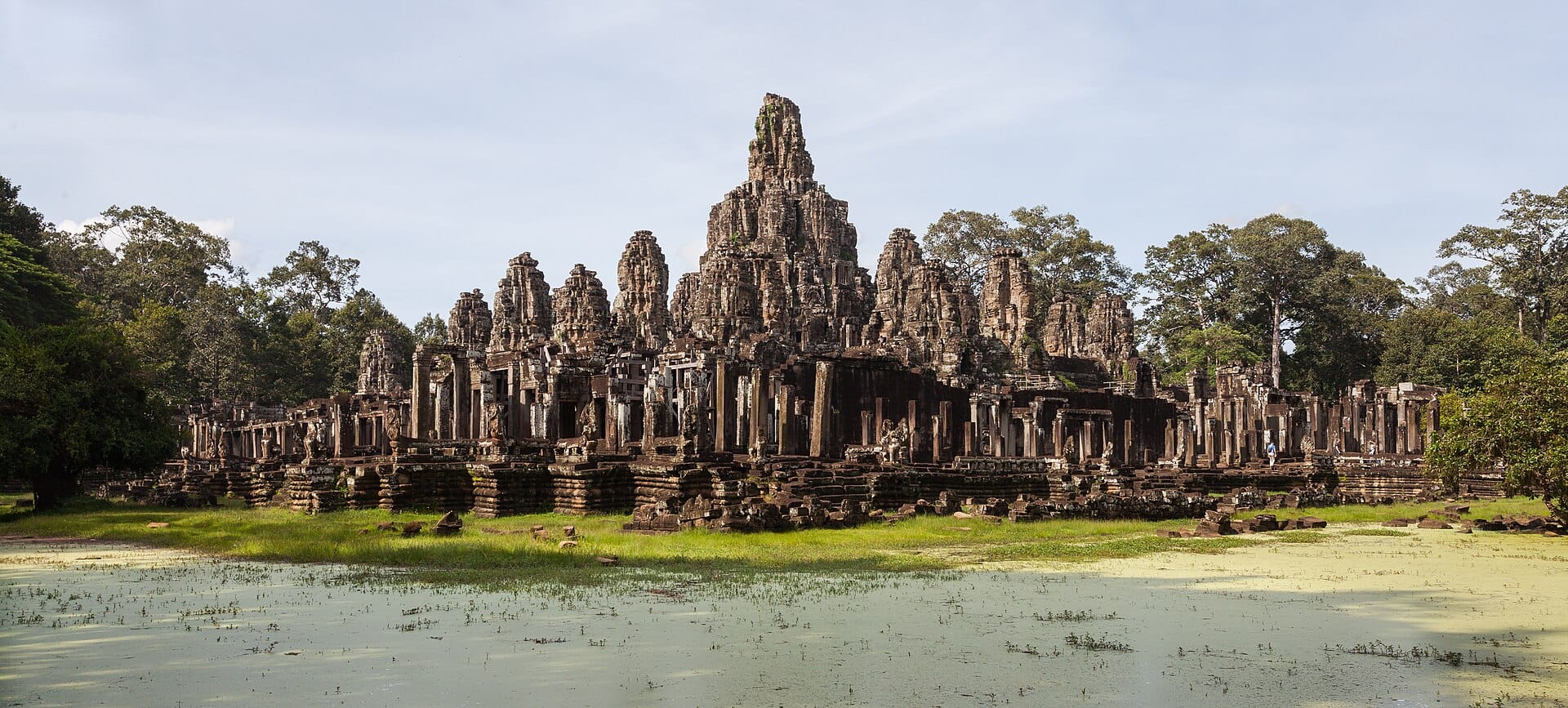
Jayavarman VII built Bayon at the end of the 12th century as the pivotal temple of Angkor Thom. Its surviving face towers and dense architecture make it radically different from the measured geometry of Angkor Wat.
APSARA highlights the exterior galleries because their carvings show markets, workers, food preparation, battles and ceremonies: an unusually vivid record of life in the Khmer capital.
What not to miss
The face towers
Move around the upper levels to see how the expressions change with angle and light.
Daily-life reliefs
Look beyond royal history for stalls, cooking, construction and river scenes.
Angkor Thom’s centre
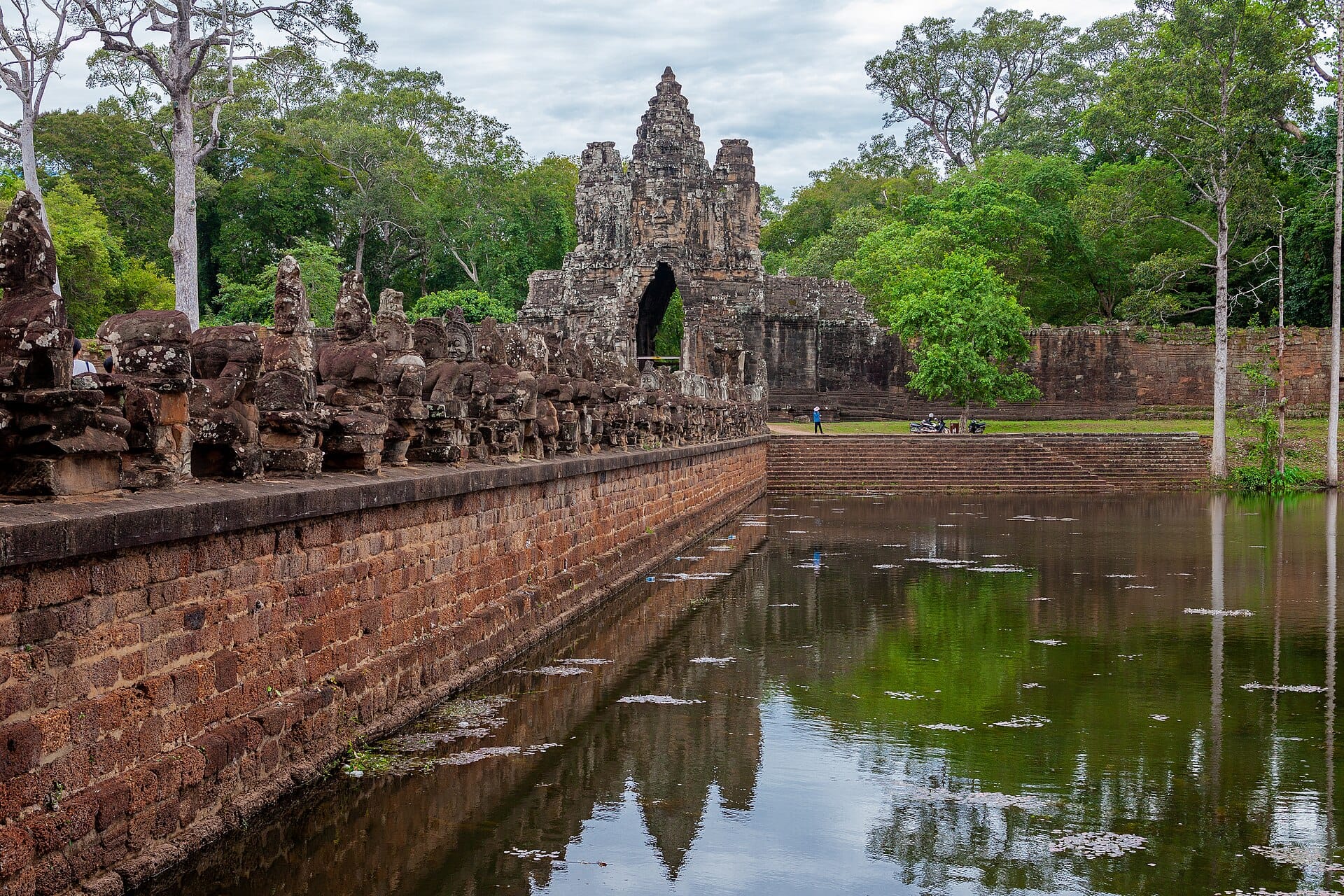
Read Bayon together with the city gates and their Churning of the Ocean of Milk causeways.
Visit advice
Treat Bayon as part of Angkor Thom rather than an isolated photo stop; Baphuon and the royal terraces are the natural continuation.
Angkor is a sacred site
Cover shoulders and knees, respect worshippers and monks, climb only where permitted, do not touch carvings and take all litter away.
Read the official visitor codeFacts and hours checked against APSARA National Authority · checked 25 August 2026.
Keep exploring
One place can be the start of your day.