Choose bases, temple visits and transfers around your children, with practical questions for rooms, vehicles and island stays.
The Map field notes / 02
One big discovery. Room around it.
A rhythm to imagine together, without fixed times or compulsory activities.
Morning
One discovery
One meaningful visit, matched to the group’s energy.
Midday
A real pause
Eat, return, rest. Leave time to enjoy your base.
Later in the day
An open choice
A short outing if everyone feels like it. Or simply take it easy.
An illustration of a possible pace, not a booked programme. Adapt it to ages, interests, heat and travel time.
A morning at the temples, a relaxed lunch and an afternoon by the pool can be a good family day. Cambodia makes it tempting to keep adding visits. Sometimes the harder decision is leaving time to rest.
Start with a few bases where you can stay several nights. Then choose outings around your children’s ages, interests and patience with travelling.
Choose the rhythm before the route
For younger children, protect sleep, meals and a comfortable return to your accommodation. For school-age children, build days around one experience they can engage with. Teenagers may welcome more independence or a longer visit, but ask them what they actually want to do.
Question
What it changes
Does someone need an afternoon sleep?
Distance from the hotel and the length of the morning outing
Are long car journeys difficult?
Number of bases and transport choices
Is swimming central to the holiday?
Accommodation choice and time left to use it
Does anyone struggle with stairs or uneven ground?
Temple selection and the pace of visits
Do the children want different things?
A lighter shared programme and some separate choices
A pool is useful only if you leave time for it. Check supervision, access and the actual pool arrangements with the accommodation rather than treating “family-friendly” as a complete description.
Give Siem Reap time beyond Angkor
Siem Reap can be a base for the temples and for slower time in town. Avoid treating the arrival evening as preparation for an obligatory sunrise the next morning. Decide whether that early start is something your family wants.
Our public brochure uses a simple idea: visit Angkor Wat, return to town, and leave Bayon and Ta Prohm for another day. That leaves time to return for lunch and decide what everyone feels like doing afterwards. Read the Angkor one-, two- and three-day guide to understand the choices.
Angkor Enterprise currently exempts children under 12 from entrance fees and may ask for proof of age. That does not make guides, transport or other attractions free. Check its official FAQ for your visit.
Choose what Phnom Penh means for your family
A capital-city stay does not have to be a succession of museums. Leave room for food, a short outing and a return to a familiar base. For sites dealing with genocide and violence, read the venue's visitor guidance and consider each child's readiness; do not add them automatically to a family checklist.
Keep a few rainy-day ideas in reserve. One visit and a leisurely break may be enough for the afternoon. The Phnom Penh guide helps you explore the existing selection.
Coast, islands or another inland stop?
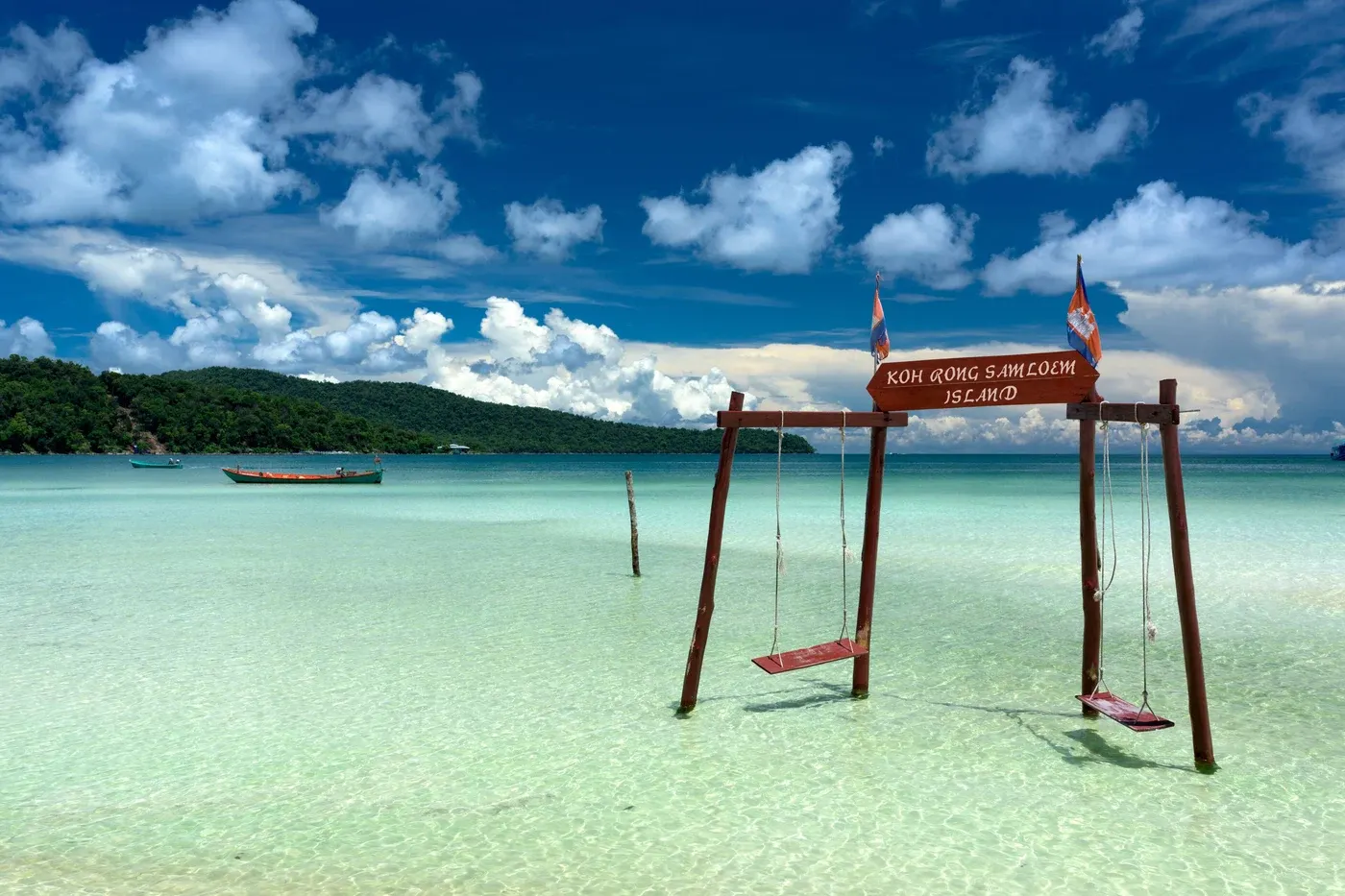
Kampot and Kep offer a different pace from the main cities. An island stay adds a sea crossing and a final connection to your accommodation. Choose according to the time you have and how much the beach matters to your holiday.
If you choose an island, confirm the arrival pier with the hotel before buying ferry tickets. Ask about the onward transfer, luggage, suitable life jackets and what happens if the sailing changes. Protect the connection to your international flight with a mainland buffer rather than relying on a same-day sea crossing.
If nature is the main interest, investigate the actual excursion before committing to a more distant base: minimum ages, walking distances, transport and cancellation conditions matter more than a destination label.
Questions to settle before paying
Ask the hotel to confirm beds, occupancy, breakfast and any extra-child charges in writing. For a private vehicle, specify passenger numbers, luggage and required child restraints; do not assume an age-appropriate seat will be available without confirmation. Check pickup points for shared transport and whether everyone has an allocated seat.
For health, vaccinations and individual medical needs, use the NaTHNaC Cambodia resource, a qualified travel-health professional and your insurer. Bring your proposed destinations and your child’s particular needs to that appointment.
What to leave open
Keep some mornings or afternoons unassigned. A second visit to somewhere the children enjoyed can be better than another long excursion. If travel dates are fixed, simplify the route before shortening every stop.
Start with our trip-length comparison and family budget example. If you would like us to turn your ages, dates and priorities into a personal programme, explore Plan My Trip. We build the journal around your family; you then book directly with the providers.
From inspiration to the ground
Continue with the useful guides.
Explore the stops that interest you. For the exact order, realistic timing and coordination, we then shape the trip around your dates.