All articles
Angkor Etiquette: A Practical Guide for Respectful Temple Visits
A practical guide to Angkor etiquette: clothing, worship, photography, stonework, marked routes, smoking, litter and responsible conduct.
A practical guide to Angkor etiquette: clothing, worship, photography, stonework, marked routes, smoking, litter and responsible conduct.
Angkor etiquette is straightforward when you remember what the park is: a protected archaeological landscape that remains sacred and active. Dress for sacred places, give worshippers and monks room, follow signs, and treat every stone as part of the monument rather than as a seat or climbing surface.
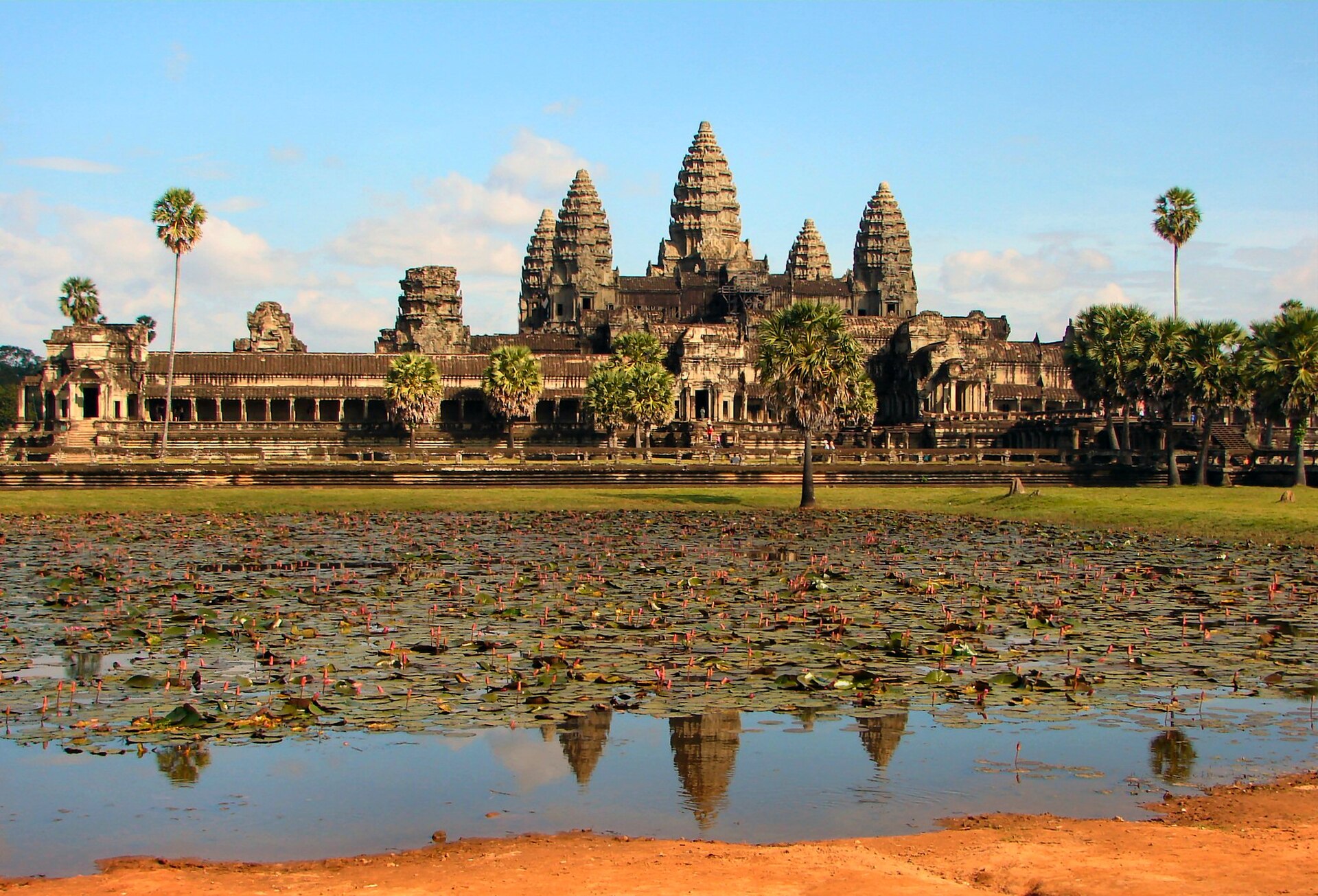
Photo: Bjørn Christian Tørrissen, Wikimedia Commons, CC BY-SA 4.0.
These points come from the official Angkor Visitor Code of Conduct. Instructions on signs and from staff take priority wherever a specific temple or area has additional restrictions.
The official dress code prohibits bare shoulders and shorts or skirts above the knees in sacred places, and encourages respectful clothing throughout Angkor. The simplest approach is to dress to that standard for the whole temple day: a light shirt covering the shoulders with trousers or a skirt below the knees.
This is more reliable than trying to decide at each doorway whether a space counts as sacred. It also avoids arriving at an upper sanctuary or active worship area and discovering that your clothes are not suitable.
APSARA National Authority asks visitors to be considerate of worshippers and monks. The official code also asks people to remain calm and avoid loud conversation or behaviour that may disturb others.
If prayer or a ceremony is underway, leave a clear path and do not move closer simply for a photograph. This is not an attraction staged around visitors: the considerate choice is the one that does not change or interrupt what is happening.
The visitor code specifically asks people to obtain permission before photographing monks. It also states that women should not touch monks or stand or sit too close to them.
For other people, asking first is the safest rule as well. Let a prayer finish, ask clearly, and accept a refusal without negotiation. Be especially cautious around children and ceremonies.
APSARA states that personal souvenir photography and video do not require prior permission. Pre-wedding photography, filmmaking, music videos, business photography and other public-facing productions require advance permission. If your visit involves professional equipment, commercial use or a drone, confirm the current procedure directly with APSARA before the shoot.
The code prohibits touching carvings, leaning against temple structures, sitting on fragile structures, moving archaeological material and graffiti. It also discourages sharp-tipped umbrellas, tripods, high heels and bulky backpacks inside temples because they can strike or damage surfaces.
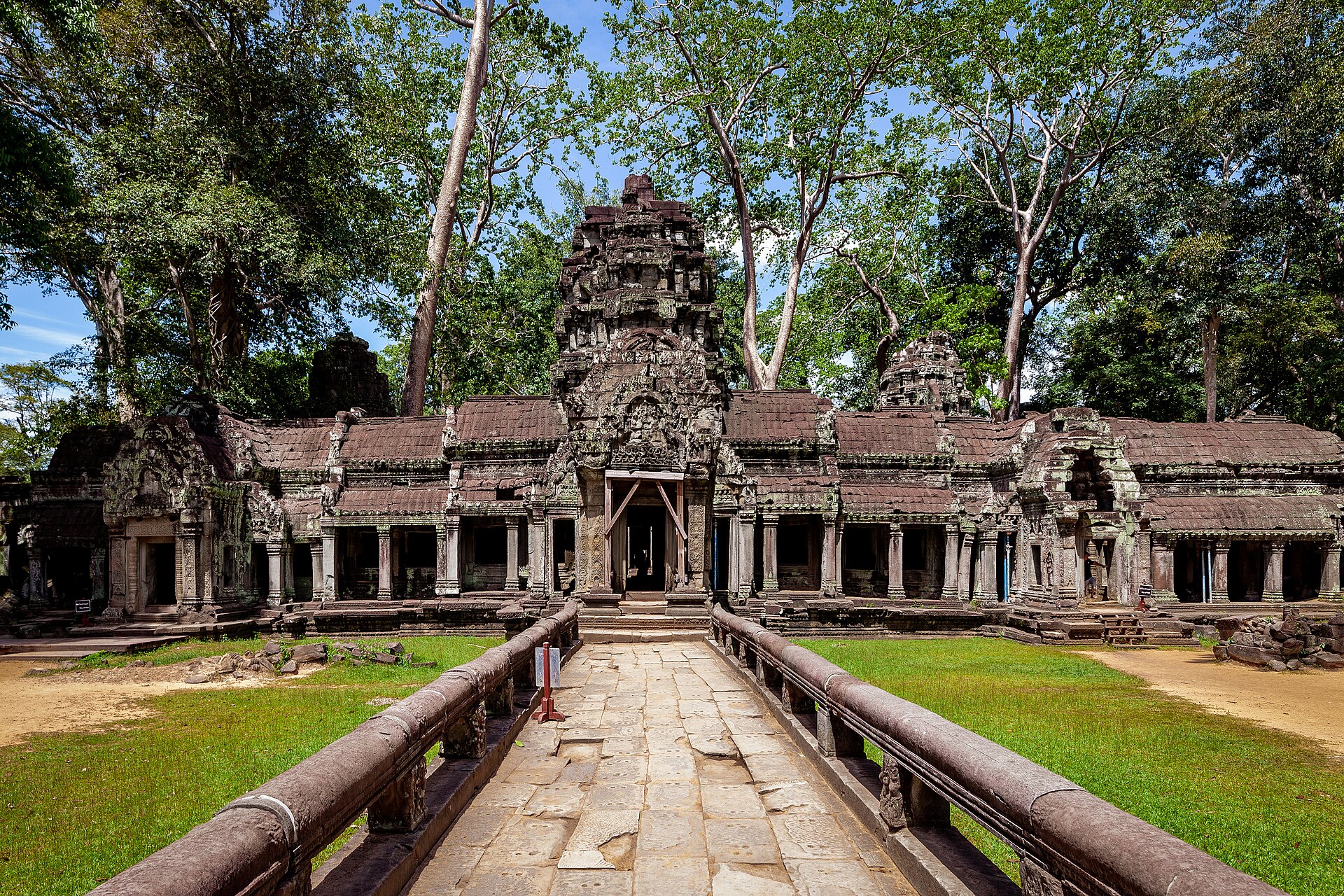
Photo: Supanut Arunoprayote, Wikimedia Commons, CC BY 4.0.
A surface can look solid and still be vulnerable to repeated contact. Treat loose blocks as protected material, not shortcuts, steps or seats.
Restricted areas protect both visitors and the monuments. Follow every sign, barrier and direction from site staff, and do not climb on loose stones.
Boardwalks, handrails and defined routes are part of conservation and visitor safety. A slightly longer marked route is part of the visit, not an inconvenience to bypass.
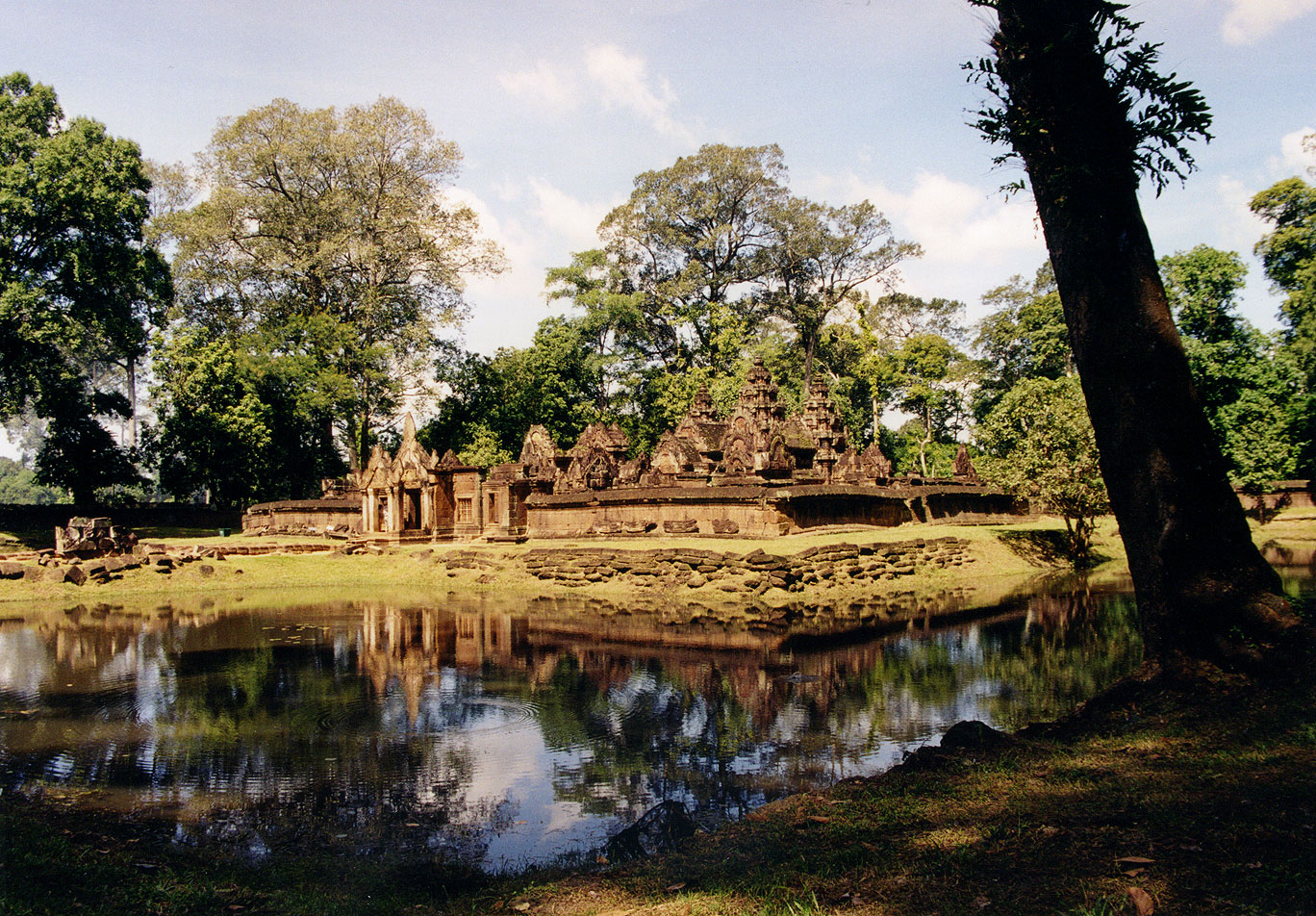
Photo: Tsui, Wikimedia Commons, CC BY-SA 3.0.
The official code says Angkor has been smoke-free since 2012 and asks visitors not to smoke or litter. Carry wrappers and bottles until you reach a bin.
It also advises against giving money or sweets directly to children because this can encourage begging instead of school attendance. Visitors who want to help are directed towards recognised organisations rather than spontaneous handouts.
Respect the people, the sacred setting and the protected fabric of the site. Dress conservatively, slow down around worship, ask before photographing people, keep off the stonework and follow local instructions.
For more context before your visit, read these facts that change how you see Angkor Wat and our guide to quieter temples around Siem Reap.
Current guidance is available from APSARA National Authority, the official Angkor Visitor Code of Conduct, and APSARA's photography guidance.
From inspiration to the ground
Explore the stops that interest you. For the exact order, realistic timing and coordination, we then shape the trip around your dates.
Want to connect it all properly?
A person from the team replies and adapts the route to your pace.
A local selection from The Map, straight to your inbox.
GEO gave Cambodia its August 2026 cover and a thirty-page feature — and listed The Map's free printed guide among the practical essentials for Angkor.
ReadCompare Koh Rong, Koh Rong Samloem and Koh Sdach by atmosphere, bays, community and transfer complexity before choosing where to stay.
ReadTen revealing facts about Angkor Wat: its scale, west-facing design, lost colours, equinox sunrise, water system and living communities.
Read